A foam roof is a layer of spray polyurethane foam (SPF) sprayed onto a flat or low-slope roof, where it expands into a seamless, insulating shell that is then sealed with a protective coating. Installed foam roofing typically costs about $6–$12 per square foot. With a recoat every 10 to 15 years or so, a foam roof can last 20 years or more. It’s popular on Bay Area Eichlers because those homes have no attic, so the roof is the only insulation over the living space.
If you own an Eichler in Palo Alto, Walnut Creek or San Rafael, or any home with a flat roof, you’ve probably been told foam is the answer. Sometimes it is. Here’s what it costs, how it compares with torch-down and TPO, and what to check before you hire an installer.
Flat roof leaking this rainy season? Call (925) 412-4584 for a flat-roof inspection and a written roof replacement quote. California Roof Pros · CSLB #1158153 · Concord & Danville, CA
What is a foam roof?
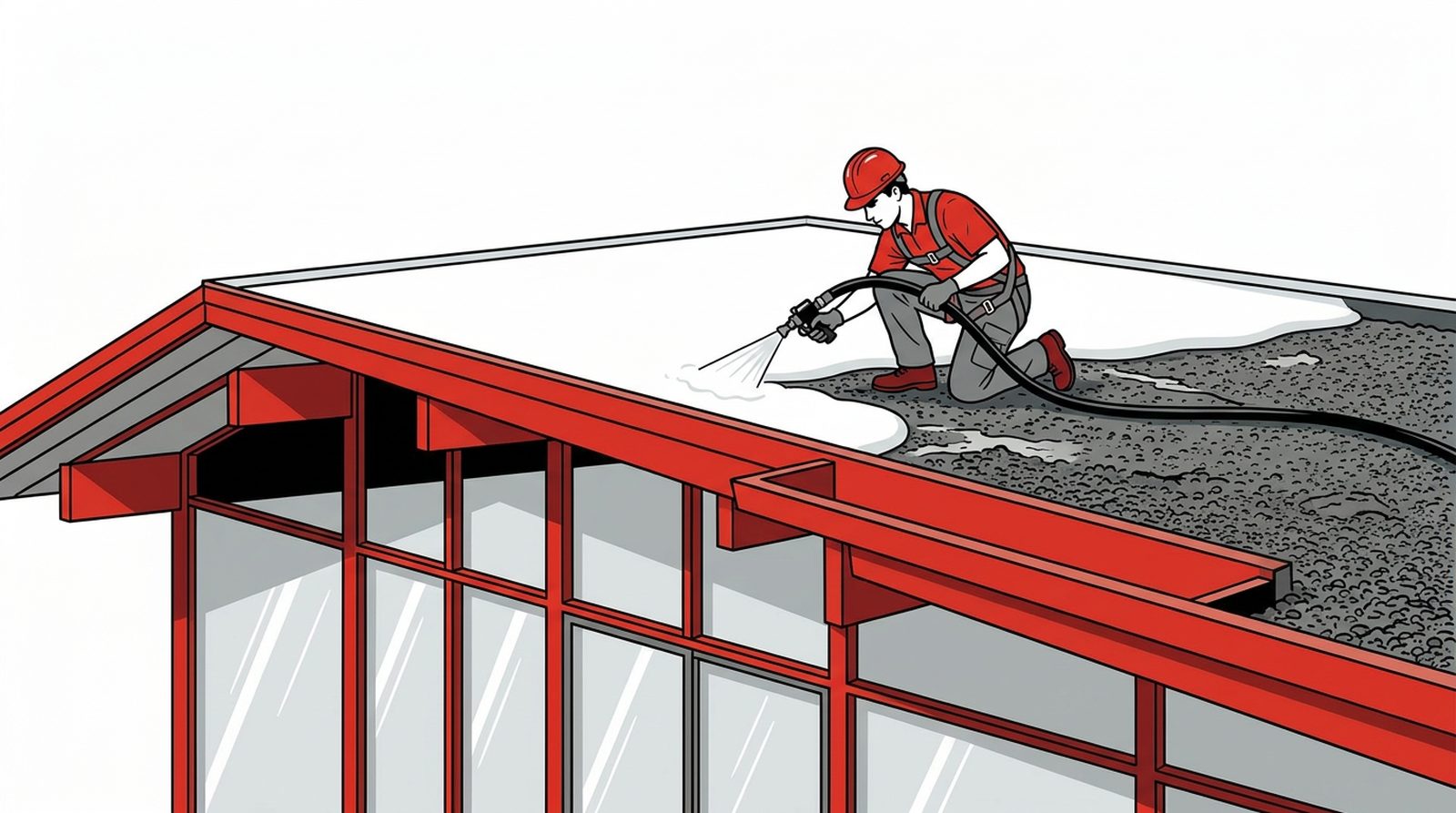
Spray polyurethane foam is a two-part liquid mixed at the spray gun. On contact with the roof it expands about 20 to 30 times, typically to a layer 1 to 1.5 inches thick per pass (Fixr). Installers build it up in passes called lifts. Because it’s sprayed rather than rolled out in sheets, a foam roof has no seams and wraps around vents, pipes and curbs without separate flashing.
Bare foam breaks down in sunlight, so every foam roof gets a coating, usually acrylic or silicone, sometimes with granules on walkways. The coating is what you maintain. The foam underneath does the waterproofing and insulating.
Why Eichlers use foam roofs
Eichlers were built with flat or low-pitch roofs, exposed beams and tongue-and-groove ceilings, and no attic. Many still have tar-and-gravel or old built-up roofs with little or no insulation, so heat moves straight through the roof deck into the living space. Foam addresses three Eichler problems at once:
- Insulation without touching the ceiling. Closed-cell roofing foam is roughly R-5 to R-7.5 per inch (Roof Observations, 2026). It goes on top of the deck, so the exposed-beam ceiling stays untouched. One Eichler installer quoted by the Eichler Network reports a 10–15 degree drop in indoor temperature on hot days with 1.5 inches of foam, especially in inland areas like Walnut Creek and Concord.
- Ponding water. The foam can be sprayed thicker in low spots to build slope toward drains. The same installer reports cutting ponding by 80 to 90 percent.
- Light weight. Foam weighs a fraction of a tar-and-gravel roof, so it doesn’t add load to the original post-and-beam structure.
How much does a foam roof cost?
| Item | Typical cost | Notes |
|---|---|---|
| Installed spray foam roof | $6–$12 per sq ft | National range for foam plus coating (Fixr) |
| 2,500 sq ft roof, 1-inch foam | About $14,000–$29,000 | Thicker foam costs more and insulates better (Fixr) |
| Eichler foam roof (reported average) | About $27,500 | One Bay Area Eichler installer’s average, 2023 (Eichler Network) |
| Silicone recoat | About $2–$3.50 per sq ft | Commercial pricing; residential jobs often price higher per sq ft (Roof Observations) |
| Acrylic recoat | About $1.25–$2.25 per sq ft | Cheaper, but less tolerant of ponding water (Roof Observations) |
Bay Area prices usually land toward the upper end because of labor costs, tear-off of old tar and gravel, and permits. Your price depends on how much of the old roof comes off, how thick the foam is, and how many skylights, vents and parapets need detailing.
What pushes the price up
- Tear-off. Removing tar and gravel and hauling it away is often a large share of the job.
- Deck repair. Decades of slow leaks can rot the tongue-and-groove decking. See roof decking repair.
- Foam thickness. Each extra inch adds insulation and cost.
- Skylights and penetrations. Eichlers often have several skylights, and each one needs careful detailing.
- Coating type. Silicone costs more than acrylic but handles standing water better.
How long does a foam roof last?
A foam roof lasts 20 years or more when the coating is kept up. The foam itself is durable. The coating wears from UV, rain and foot traffic, and once it’s gone the foam degrades quickly. Sources differ on the recoat interval, from around 5–10 years for the first recoat to every 10–20 years after that. Plan on an inspection every year or two and a recoat when the coating thins or chalks.
A well-maintained foam roof can be recoated rather than torn off, which is its main long-term cost advantage. A neglected one, where water has soaked into exposed foam, usually has to come off.
Foam vs. other flat-roof options
| System | Typical lifespan | Strengths | Watch-outs |
|---|---|---|---|
| Spray foam (SPF) | 20+ years with recoats | Adds insulation, seamless, builds slope, light | Needs recoats, installer skill is critical, overspray risk |
| Torch-down (modified bitumen) | 15–25 years | Tough under foot traffic, fused seams | No added insulation, open flame |
| TPO single-ply | 20–30 years | Reflective white membrane, low maintenance | Needs separate insulation board, punctures more easily |
| Tar and gravel (built-up) | Up to about 30 years | Proven, multiple layers | Heavy, hard to find leaks under gravel |
For more detail, see our guide to types of flat roofing materials.
Foam roofs and Title 24 cool-roof rules
California’s Energy Code (Title 24, Part 6) requires many low-slope roof replacements in inland climate zones to use a cool roof: a reflective surface rated by the Cool Roof Rating Council. Most foam roofs already finish with a white reflective coating, so meeting the rule is usually simple. Ask your installer to name the CRRC-rated coating on the quote. Cooler coastal zones are generally exempt, and the local permit office confirms what applies to your address.
When foam is the wrong choice
- Wet season scheduling. Foam won’t bond to a damp, frosty or dirty surface. It needs a dry, calm window, which matters between November and March. See replacing a roof in winter.
- Tight neighbors and cars. Overspray can drift in wind. Good installers mask, use wind screens and stop when it’s gusty.
- Owners who won’t maintain it. If no one will inspect and recoat, TPO or torch-down may age better.
- Heavy foot traffic. Roof decks and equipment areas need walk pads or a tougher surface.
Questions to ask a foam roofing contractor
- Are you a licensed C-39 roofing contractor, and do you do the foam work with your own crew?
- Will you remove the old tar and gravel, and how will you check the decking underneath?
- How thick will the foam be, and what insulation value does that give?
- Which coating will you use, how many coats, and is it CRRC rated?
- How will you protect cars, windows and neighbors from overspray?
- What warranty covers the foam, the coating and the workmanship, and what maintenance keeps it valid?
Our guide on how to choose a roofer in California covers licensing and contract checks.
Foam roof FAQ
How much does a foam roof cost?
Installed spray foam roofing typically costs about $6–$12 per square foot, or roughly $14,000–$29,000 for a 2,500 sq ft roof with 1 inch of foam. One Bay Area Eichler installer reported an average of about $27,500. Tear-off, foam thickness and skylights move the price most.
How long does a foam roof last?
20 years or more with maintenance. The protective coating needs a recoat periodically, often first at 5–10 years and then every 10–15 years. If the coating wears through and the foam is exposed, the roof degrades quickly.
Is a foam roof good for an Eichler?
Often, yes. Eichlers have no attic, so foam adds insulation on top of the roof deck without changing the exposed-beam ceiling. It also builds slope to reduce ponding. Choose an installer with Eichler experience and plan for regular recoats.
Is foam roofing better than TPO?
Foam adds insulation and has no seams, but needs recoating. TPO is a reflective membrane that needs little maintenance but relies on separate insulation board. On an uninsulated Eichler, foam often wins on comfort. On a roof nobody will maintain, TPO may be the safer bet.
Can a foam roof be installed in winter?
Yes, on dry days. Foam won’t bond to a damp, frosty or dirty surface, so Bay Area installers schedule around rain and wait for the roof to dry. Plan for weather delays between November and March.
Not sure foam is right for your roof?
California Roof Pros inspects flat and low-slope roofs in Palo Alto, Walnut Creek and across the Bay Area and Greater Sacramento, from our Concord and Danville offices. We’ll tell you what the roof needs, whether that’s a repair or a replacement. Call (925) 412-4584 or request a quote.
California Roof Pros · 5650 Imhoff Drive, Suite A, Concord, CA 94520 · CSLB #1158153

The CA Roof Pros Editorial Team brings together roofing professionals and experienced content specialists dedicated to providing accurate, practical information about roofing, repairs, maintenance, and replacement. Every article is researched and reviewed to help California homeowners make informed decisions about their roofing needs.