Yes, you can get a new roof in winter in Northern California. Bay Area and Sacramento winters are mild, and even in December and January most days are dry. In Concord, Sacramento and San Jose it rains on roughly 9–11 days a month. A good roofer watches the forecast, tears off only as much roof as can be covered the same day, and keeps the house dried in overnight. Expect some weather delays, but you don’t have to wait for spring if the roof is failing.
If your roof leaked in the first storms of the season, waiting until April means four or five more months of buckets and tarps. Here’s how winter re-roofing works in Northern California, what changes compared with summer, and when it makes sense to wait.
Roof leaking now? Call (925) 412-4584 for an inspection and a written roof replacement quote. If water is coming in, see what to do when your roof is leaking. California Roof Pros · CSLB #1158153 · Concord & Danville, CA
How much does it actually rain in a NorCal winter?
Less often than it feels. Storms arrive in bunches, with dry spells of several days or more in between. Average wet days (0.01 inch or more of rain):
| City | December: wet days / rainfall | January: wet days / rainfall |
|---|---|---|
| Concord | 9 days / 3.6 in | 10 days / 3.5 in |
| Sacramento | 10 days / 3.5 in | 11 days / 3.9 in |
| San Jose | 10 days / 2.3 in | 9 days / 2.8 in |
| Oakland | 11 days / 4.7 in | 10 days / 4.4 in |
| San Francisco | 12 days / 4.8 in | 11 days / 4.4 in |
| Santa Rosa | 13 days / 6.5 in | 14 days / 5.8 in |
Source: Current Results, December and January rainfall averages. Many wet days bring only light showers.
A typical asphalt shingle re-roof on a house takes a few working days. Even in the wettest month, most Bay Area and Sacramento-area homes see enough dry stretches to fit one in.
How roofers keep your house dry during a winter re-roof
- Forecast-driven scheduling. Tear-off starts only with a clear window ahead. If a storm moves in early, the job pauses.
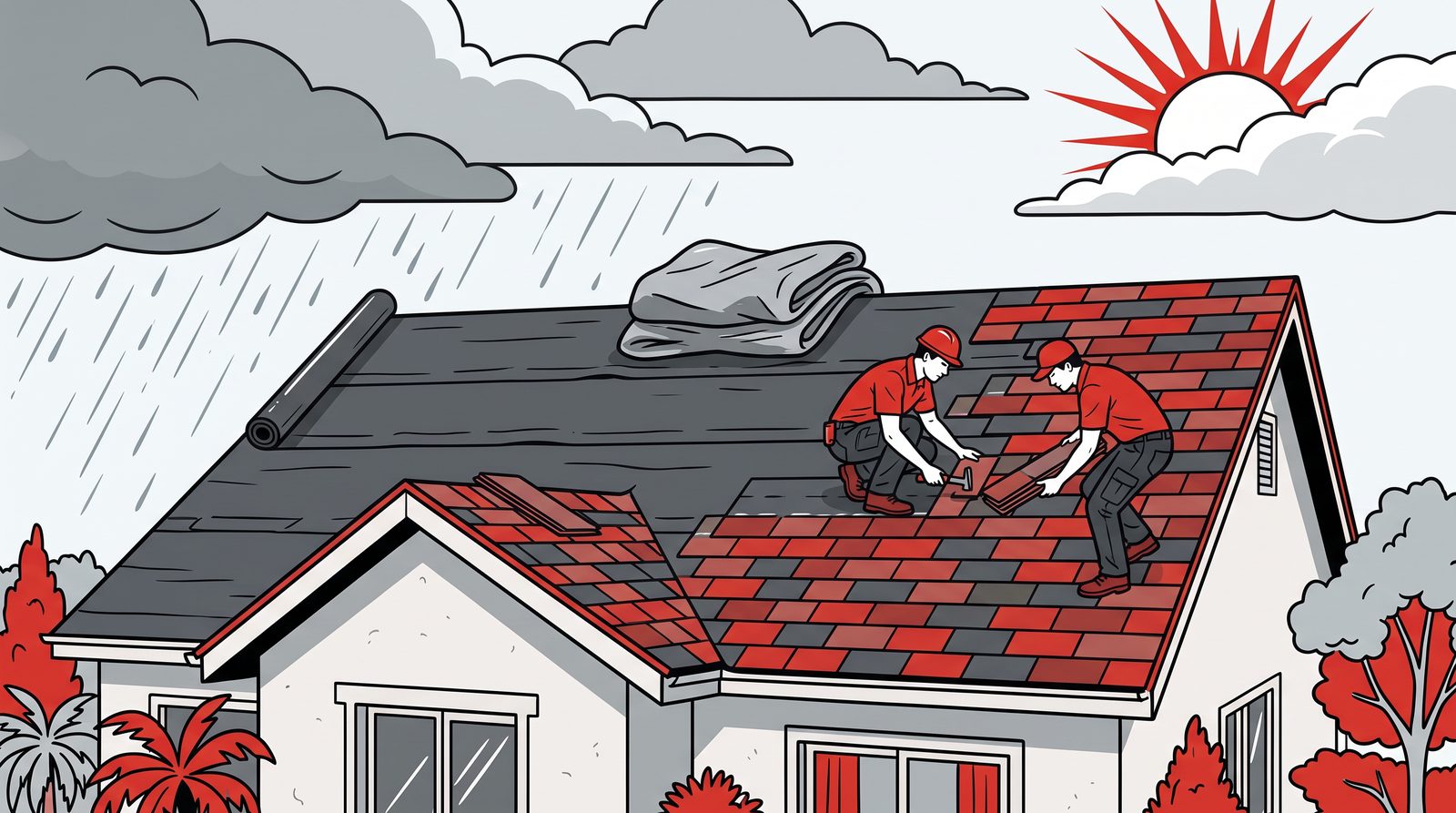
- Tear off only what can be covered that day. Instead of stripping the whole roof at once, crews work section by section.
- Dry-in before quitting. Any exposed deck gets underlayment the same day, so the house is water-tight overnight even before shingles go on.
- Tarps on standby. If rain arrives mid-job, open areas are tarped and secured.
- Dry decking only. Underlayment and shingles shouldn’t go over wet or frosty sheathing. Crews wait for the deck to dry, which can mean a late start on a dewy morning.
Do cold temperatures matter for shingles?
Not much in most of Northern California. GAF, the largest U.S. shingle maker, says there’s no practical lower temperature limit for installing its asphalt shingles as long as precautions are taken. Shingles are easiest to handle above about 40°F, which covers most Bay Area and Sacramento winter afternoons.
- Self-sealing strips need warmth and sun. Shingles bond to each other with heat-activated adhesive. In a cool, cloudy stretch, that seal can take longer. In very cold conditions shingles may need to be hand-sealed with roofing cement to resist wind before they bond.
- Cold shingles are stiffer. They can crack when bent over ridges and hips, so crews keep bundles warm and handle them carefully.
- Warranty. GAF says installation temperature doesn’t affect its shingle warranty. Other brands differ, so ask your roofer to confirm for the product on your quote.
Foothill and Sierra-adjacent homes see more frost, and occasionally snow, so winter roofing there needs more care than in the valley or on the coast.
Which roof types work best in winter?
| Roof type | Winter install? | What to know |
|---|---|---|
| Asphalt shingle | Yes | Most common winter re-roof. Needs dry deck; sealing may be slower on cold days. |
| Concrete or clay tile | Yes | Tile isn’t temperature-sensitive. The underlayment goes down first and must stay dry. |
| Standing seam metal | Yes | Little affected by cold. Underlayment dry-in still matters. |
| Torch-down / TPO flat roof | Yes, on dry days | Membranes need a dry surface; no work in rain. |
| Spray foam | Dry windows only | Foam won’t bond to a damp or frosty surface. See our foam roof guide. |
Pros and cons of replacing a roof in winter
Advantages:
- You stop the damage now. A failing roof in December leaks again with every storm, which risks ceilings, insulation and mold.
- Shorter wait times. Demand is lower than in spring and summer, so roofers often have more openings. Some offer off-season pricing, though that varies.
- Insurance clock. If you’re filing a claim, prompt repairs help show you limited further damage. See our insurance claims help.
Disadvantages:
- Weather delays. A multi-day storm can push your start date or pause the job.
- Shorter days. Less daylight means fewer working hours per day.
- Some systems wait. Spray foam and coatings need longer dry spells.
Should you replace now or wait for spring?
Replace now if: the roof leaks in more than one place, decking is soft or sagging, shingles are missing or curling across large areas, or a roofer has told you it isn’t worth repairing again.
Repair now and replace in spring if: the leak is from one spot, such as flashing around a chimney or vent, and the rest of the roof has life left. A targeted repair can buy you a dry winter. Our guide to roof flashing repair covers the most common winter leak.
Either way, book the inspection now. Fall is often called the best time to re-roof, and spring calendars fill fast.
What a winter roof replacement costs
Winter doesn’t change material prices much. Most Northern California homeowners pay $15,000–$30,000 for an asphalt shingle roof and $30,000–$60,000 or more for concrete or clay tile. See our roof replacement cost guide for the details, and our financing options if the timing is unexpected.
Winter roof replacement FAQ
Can I get a new roof in winter?
Yes. In the Bay Area and Sacramento, winters are mild and most days are dry even in December and January. Roofers schedule around storms, tear off only what they can cover the same day, and dry in the roof every night.
Can a roof be replaced in the rain?
No. Work stops when it rains, and shingles or underlayment shouldn’t go over a wet deck. Roofers cover any open areas with underlayment or tarps and resume once the deck is dry.
Is it too cold to install shingles in Northern California?
Rarely. GAF says there’s no practical lower temperature limit for its asphalt shingles with proper precautions, and they handle best above about 40°F. In very cold weather, shingles may need hand-sealing until the adhesive strips bond.
Is it cheaper to replace a roof in winter?
Sometimes. Demand is lower, so roofers may have more availability and some offer off-season pricing. Material costs are roughly the same year-round, so don’t expect a large discount.
How long does a winter roof replacement take?
The work itself usually takes a few working days for a typical house, about the same as in summer. Rain can add days to the calendar, so allow some flexibility in the schedule.
Don’t wait for spring if your roof is failing.
California Roof Pros inspects and replaces roofs from our Concord and Danville offices, across the Bay Area and Greater Sacramento. Call (925) 412-4584 or request a quote.
California Roof Pros · 5650 Imhoff Drive, Suite A, Concord, CA 94520 · CSLB #1158153

The CA Roof Pros Editorial Team brings together roofing professionals and experienced content specialists dedicated to providing accurate, practical information about roofing, repairs, maintenance, and replacement. Every article is researched and reviewed to help California homeowners make informed decisions about their roofing needs.