
A clay tile roof costs around $17,329 installed on average, with a typical range of $8,466 to $26,256. Labor, roof complexity, underlayment, and structural reinforcement often push the final clay tile cost well above the tile material price alone.
That's the number California homeowners should use to start the conversation, not finish it. Clay tile remains a premium roofing system because the tile is heavy, installation takes more skill, and every hip, valley, wall intersection, chimney, skylight, and vent creates additional flashing and cutting work. On older California homes, the framing may also need review before a contractor can responsibly promise a final price.
Table of Contents
- Understanding the True Clay Tile Cost
- Material and Labor Cost Breakdown
- Hidden Structural and Removal Costs
- Lifecycle Value and Long-Term Savings
- Financing and Insurance Considerations
- Getting an Accurate Quote for Your Property
Understanding the True Clay Tile Cost
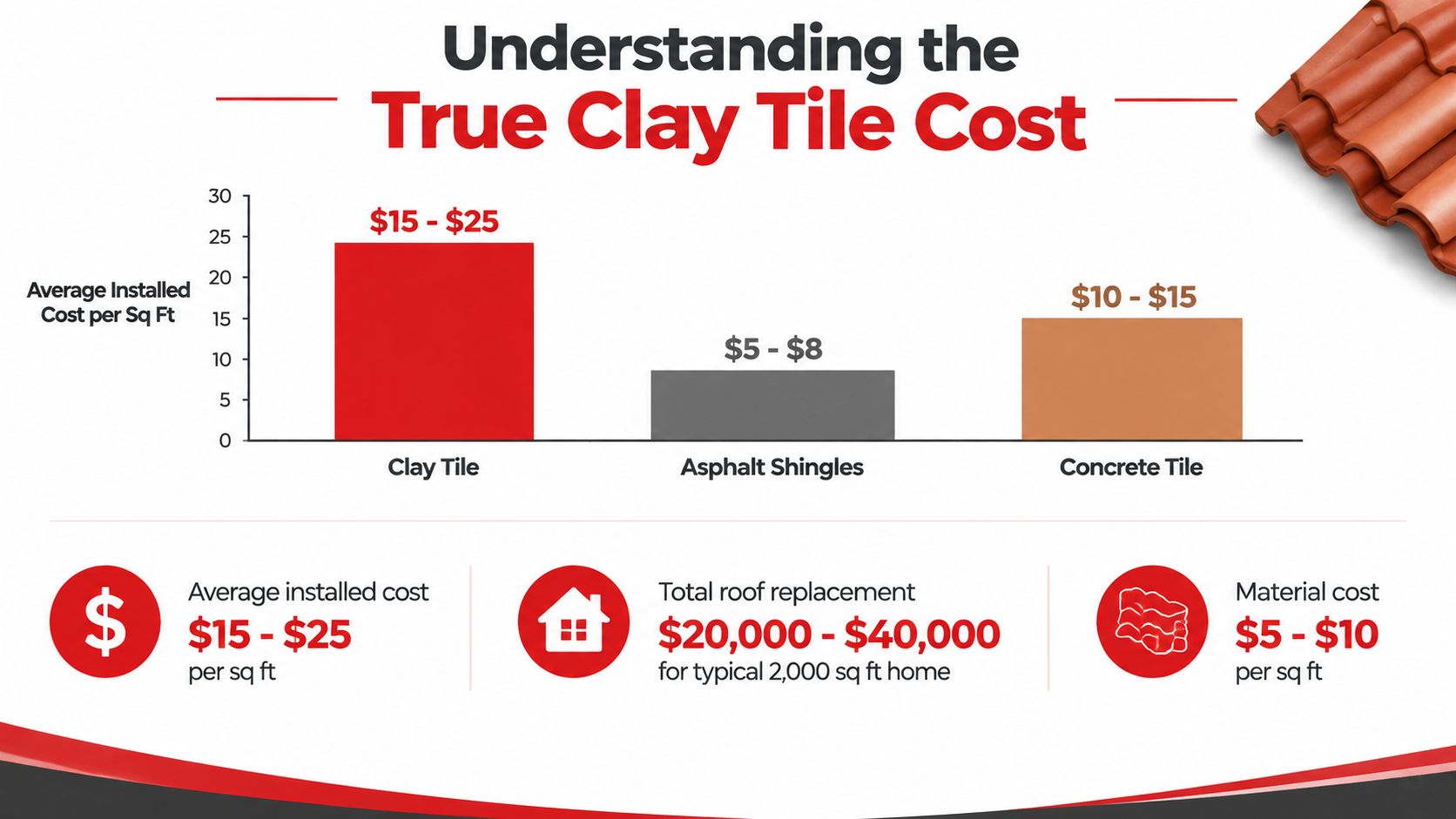
A clay tile roof can range from $8,466 to $26,256, with an average installed figure of $17,329. Larger homes and specialty Spanish, Mission, or barrel profiles can reach about $46,000. These figures come from the clay tile roofing cost guide, but California homeowners should treat them as starting points, not bids.
Clay tile sits near the expensive end of roofing materials because the roof is a complete assembly, not a stack of tiles. The contractor must account for removal, deck condition, waterproofing, flashings, attachment methods, labor access, and the framing carrying the finished load. In California, seismic movement, wildfire exposure, and insurance requirements can add review and installation constraints that online averages do not show.
The budget tier homeowners should expect
Another benchmark places installed clay tile at about $994 per roofing square, with a typical 1,700-square-foot roof costing roughly $16,901. Replacement work averages closer to $20,055, since the scope may include tear-off, disposal, new underlayment, flashing updates, and repairs discovered after removal. Use these figures as a broad planning reference, then confirm the scope with a measured inspection.
Clay can cost roughly twice as much as basic asphalt shingle systems in comparable projects. Heavy units take longer to stage and install, trained crews must handle them carefully, and complex roof geometry adds labor around hips, valleys, chimneys, skylights, and wall intersections. Those areas also carry higher water-intrusion risk, so cutting flashing work to protect a budget is a poor trade.
Spanish or Mediterranean design can raise the roofing budget beyond the tile itself. Roof profile, pitch, overhangs, and decorative details affect framing, waterproofing, and installation time. The resource on costs of Spanish colonial home designs provides useful context for pricing the roof as part of the broader design.
What to ask before accepting a baseline price
A generic estimate cannot confirm whether a Concord, East Bay, or Southern California property can carry the selected tile. Ask these questions before approving a proposal:
- What roof area is being measured? Heated living space is not the actual roof surface.
- Is the price for repair, lift-and-relay, or full replacement? Each scope requires different labor and materials.
- Does the quote include underlayment and flashing? Tile sheds water, but the layers below provide primary waterproofing.
- Has the framing been evaluated? Weight concerns can turn a re-roof into structural work.
- Are tear-off, disposal, permits, and site protection included? Missing items often become change orders.
For a broader local benchmark, review the guide to average roof replacement cost, then replace generic pricing with a property-specific inspection and written scope.
Material and Labor Cost Breakdown
Material pricing doesn't explain most clay tile quotes. Current installation benchmarks place completed clay tile systems at $11 to $22 per square foot, while clay tile alone commonly runs $3 to $7 per square foot. Labor can represent roughly 40% to 60% of the total project cost, largely because crews handle heavy material slowly and must cut, fit, and flash difficult roof areas carefully. The clay roofing cost breakdown provides these ranges.
That distinction matters when a homeowner compares a tile price at a showroom or supply yard with a contractor's installed proposal. The tile is only one component. The finished roof also requires preparation, underlayment, battens or approved attachment systems, metal work, ventilation details, transitions, cleanup, and quality control.
| Cost Component | Per Square Foot | Typical Total (1,700 sq ft) |
|---|---|---|
| Clay tile material | $3 to $7 | $5,100 to $11,900 |
| Complete installed roof | $11 to $22 | $18,700 to $37,400 |
| Labor share | About 40% to 60% of total | Depends on the final scope |
The table applies the verified per-square-foot ranges to a 1,700-square-foot roof. It isn't a substitute for a measured proposal, because the actual roof area may be larger than the home's interior footprint and the labor mix changes with pitch, access, profile, and existing conditions.
Why labor expands on California roofs
Clay tile work is slower than asphalt work because each piece must be handled without unnecessary breakage, aligned to the roof layout, and secured according to the roof design and applicable requirements. Hips and ridges demand careful finishing. Valleys and penetrations demand accurate cutting and flashing. A crew that rushes those details can leave a visually attractive roof with weak water management.
California roofs also bring site-specific complications. Tight side yards, hillside access, solar equipment, multiple roof planes, and older framing can increase handling time. Seismic considerations make the attachment and structural conversation more important, but a contractor shouldn't claim a home needs reinforcement without a proper evaluation.
How to read the quote
A sound estimate separates the work instead of presenting one unexplained total. The homeowner should see line items for:
- Material selection: Profile, color, accessories, and whether specialty pieces are included.
- Installation labor: Placement, cutting, fastening, ridge and hip finishing, and cleanup.
- Waterproofing: Underlayment, valleys, wall flashings, penetrations, and perimeter details.
- Preparation: Tear-off, disposal, deck inspection, and any authorized deck repairs.
- Project controls: Protection of landscaping and walls, permits, inspections, scheduling, and warranty documentation.
A quote isn't inflated because labor is substantial. The warning sign is an estimate that hides labor, excludes waterproofing, or provides no allowance for what happens when the deck and framing become visible.
Hidden Structural and Removal Costs
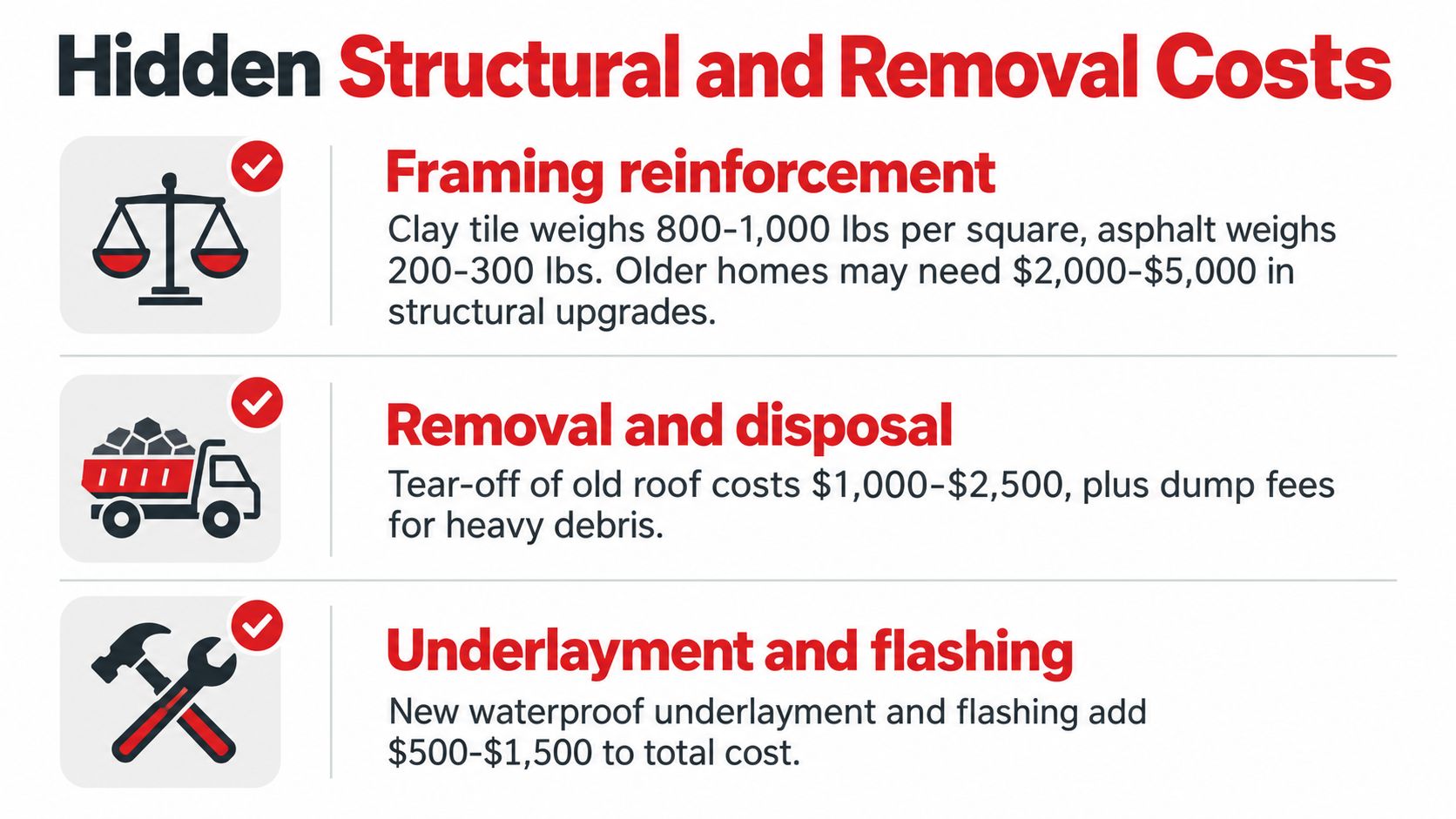
A clay tile roof can add $1,000 to $10,000 or more in structural reinforcement before installation begins. The clay tile structural cost guide identifies reinforcement as a potential cost when existing framing cannot carry the assembly.
That risk matters in California, where older construction, seismic design concerns, wildfire exposure, and insurance requirements can affect the roof decision at the same time. The visible tile is only one part of the budget. Framing, sheathing, waterproofing, access, and disposal can determine whether the project stays near the baseline or reaches a higher cost tier.
The structural question comes first
Have the contractor identify the existing roof assembly and review its capacity before you order tile. That review does not mean reinforcement is automatic. It means the contractor should examine the framing instead of assuming it is adequate or promising that upgrades will be unnecessary.
Older homes, steep roofs, and complicated layouts deserve closer inspection. If reinforcement, tear-off, underlayment replacement, and related repairs are included, total pricing can reach the $12 to $25 or more per square foot range. The clay tile installation cost guidance places projects with added work in that broader range.
The inspection should cover rafters or trusses, the roof deck, existing tile attachment, transitions, and signs of deflection or water damage. If an engineering review may be required, the estimate should clearly state whether it is included, excluded, or required before construction. That detail prevents a structural allowance from becoming an unexpected change order.
Removal isn't a minor line item
Clay tile removal takes careful handling, staging, and disposal. Crews must manage heavy debris rather than treating it like a light shingle tear-off. They also need to protect walls, windows, landscaping, driveways, and exterior finishes while moving tile from the roof to the ground.
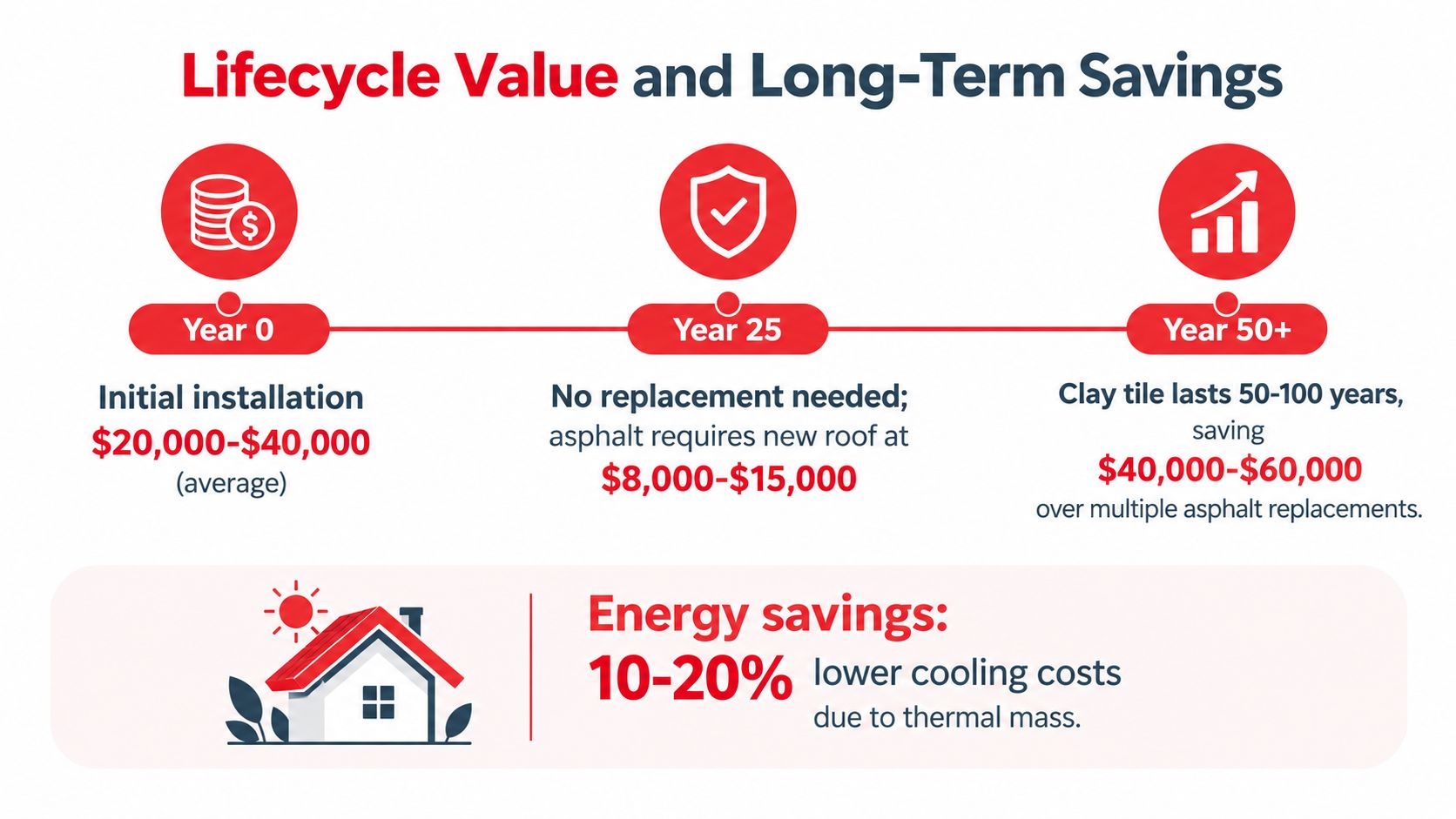
Underlayment creates another hidden lifecycle expense. Clay tile can last 50 to 100 years, but its waterproofing layer commonly reaches replacement time sooner, in the 20 to 30 year range. The clay tile lifespan and cost overview explains why durable tile can remain serviceable while the underlayment still needs renewal.
Practical rule: A clay tile quote that says little about framing, underlayment, flashing, and disposal is incomplete for a California homeowner.
Before approving demolition, request written answers to four questions: Can the existing structure carry the selected assembly? What happens if damaged decking appears? Which underlayment and flashings are specified? Does the price include removal and disposal? Clear answers expose hidden costs while there is still time to adjust the budget.
Lifecycle Value and Long-Term Savings
A $17,329 clay tile roof spread across a 75-year service period works out to less than $250 per year before maintenance. That comparison changes the budget conversation. An asphalt roof may require two replacements over the same period, while clay can keep its original tile in service when the assembly is properly designed and maintained.
The long-term value depends on more than the tile itself. Structural capacity, underlayment, flashing, installation quality, and future repair access determine whether the roof reaches its expected service horizon. California homeowners should price those components at the start instead of treating them as optional upgrades.
The tile and the waterproofing have different clocks
Tile is the visible protective surface, but the waterproofing system underneath follows a separate maintenance schedule. A long-lasting tile roof still needs planned inspections and underlayment work. Budgeting for that project prevents a supposedly permanent roof from producing a major surprise later.
A well-planned repair may allow crews to lift and reset usable tiles instead of replacing the entire covering. That outcome depends on tile condition, breakage during handling, access, matching material, roof-deck condition, and flashing details. Require the contractor to describe the reset plan in writing and identify which components will be replaced.
California-specific value considerations
Clay makes sense in many California neighborhoods because homeowners value fire resistance, weathering performance, and architectural appearance. Those benefits matter in wildfire-prone areas, but insurance treatment depends on the policy and carrier. Ask how the complete roof assembly affects eligibility, underwriting, required documentation, and renewal. Never assume the material automatically earns a premium reduction.
Seismic conditions also make structural planning part of the lifecycle calculation. A heavier roof can require framing review or reinforcement, particularly on an older home. That upfront work may raise installation cost, but ignoring it creates a greater risk of failed inspections, change orders, or premature damage.
Energy savings require the same discipline. Clay's thermal mass can affect roof performance, but comfort and cooling costs also depend on insulation, ventilation, attic design, air sealing, windows, solar exposure, and equipment. A contractor should not promise a fixed savings amount without assessing the property.
When the premium makes sense
Clay is the stronger financial choice for an owner who plans to stay for decades, values the architectural finish, and can fund scheduled waterproofing maintenance. It is a weaker choice when the structure needs extensive upgrades, the owner wants the lowest initial price, or the roof geometry makes installation unusually difficult.
The cheapest roof is the one that meets the property's structural needs, manages water correctly, and avoids premature replacement.
Compare the full installation scope, planned maintenance, likely replacement timing, insurance requirements, and intended holding period. The tile price alone does not show the roof's real cost.
Financing and Insurance Considerations
A premium roof can be financially sensible and still exceed a household's available cash. The practical solution is to separate the decision into scope, timing, and payment method. A homeowner should first confirm the necessary work, then identify the amount that must be funded, and only then compare financing terms.
Common options include home equity borrowing, personal lending, contractor-arranged payment plans, and deferred-payment programs. Each option has different approval requirements, interest costs, fees, and consequences if the homeowner delays repayment. A homeowner reviewing broader construction loan types and costs can use that framework to ask better questions, even when the project is residential roofing rather than new construction.
Build the payment decision around the roof scope
The written estimate should distinguish essential repairs from elective upgrades. Structural reinforcement, safe removal, waterproofing, flashing, and code-related work belong in the necessary scope. Profile changes, decorative accessories, and aesthetic upgrades may be important, but they should be identified separately so the homeowner can see what drives the payment amount.
A financing review should cover:
- Total financed amount: Include approved change-order rules, fees, and any work excluded from the base proposal.
- Repayment conditions: Confirm the rate, term, first payment date, early-payment rules, and consequences after a promotional period.
- Deferred payments: Understand whether interest accrues during the deferral and when regular payments begin.
- Property risk: Avoid taking on a payment that depends on uncertain insurance reimbursement or an unapproved future claim.
Homeowners can also review financing for roof replacement while comparing offers. The goal isn't to make an expensive roof feel cheap. The goal is to prevent a necessary replacement from being postponed until leaks damage insulation, ceilings, walls, or personal property.
Insurance claims require documentation
Insurance coverage depends on the policy, cause of loss, exclusions, age, maintenance history, and carrier evaluation. Clay tile may be relevant to fire and weather discussions, but no contractor can guarantee coverage or a premium adjustment. The homeowner should contact the insurer promptly, document visible damage, avoid unnecessary repairs before inspection, and keep receipts for emergency stabilization.
A contractor assisting with a claim can help document roof conditions, organize the scope, and coordinate scheduling after the carrier's process advances. The policyholder still controls the claim and should review every estimate, supplement, and coverage decision directly.
California homeowners should request written answers about whether the insurer will pay for matching materials, code-required upgrades, underlayment, structural work, and depreciation. Those details can materially change the amount that must be paid out of pocket.
Getting an Accurate Quote for Your Property
An accurate clay tile quote starts with a roof inspection, not a phone estimate based on interior square footage. The contractor needs to measure the roof, inspect visible tile and flashings, review roof planes and penetrations, assess access, and identify signs of water intrusion. The inspection should also determine whether the existing framing and deck require further evaluation.

What a credible proposal includes
The homeowner should receive written findings, photographs where useful, a defined scope, material specifications, exclusions, warranty terms, and a payment schedule. If the roof requires engineering or structural review, that requirement should appear before work begins rather than after tile has been delivered.
A dependable proposal should answer these questions:
- What is being replaced? Tile, underlayment, flashings, battens, deck sections, ventilation, and accessories should be identified.
- What remains uncertain? The contractor should disclose conditions that can't be confirmed until removal.
- Who manages the work? A named project manager and on-site foreman provide clear responsibility for scheduling and workmanship.
- What credentials apply? Homeowners should verify that the contractor is California CSLB-licensed, insured, and bonded.
- What happens after installation? The proposal should state workmanship coverage, manufacturer-backed warranty options, and service procedures.
The residential roof replacement service offered by a licensed contractor can be evaluated against those criteria. Same-day pricing is useful when it follows a real inspection and a written scope. A fast number without roof measurements or structural discussion is only a guess.
For Concord and East Bay homeowners, the decision should come down to documented conditions and long-term intent. Clay tile can deliver decades of service and a distinctive California appearance, but only when the structure, waterproofing, flashing, and installation plan are priced accordingly. Schedule a free inspection with California Roof Pros to receive written findings, a defined clay tile scope, and a same-day quote based on the actual property. California Roof Pros serves homeowners and commercial property owners across California, with project planning, insurance claim assistance, and financing options available through the installation process.

The CA Roof Pros Editorial Team brings together roofing professionals and experienced content specialists dedicated to providing accurate, practical information about roofing, repairs, maintenance, and replacement. Every article is researched and reviewed to help California homeowners make informed decisions about their roofing needs.