
The 2025 Verisk benchmark for the average residential roof replacement cost in the United States is $17,631, and California projects typically land at or above that figure. The final number changes with roof surface area, material, pitch, tear-off requirements, code upgrades, access, and the condition of the decking underneath.
That benchmark matters because it's higher than many older online estimates. It also isn't a contractor quote. National consumer guides show a much wider spread, which is exactly why Concord and East Bay homeowners need to treat the average roof replacement cost as a starting point, not a promise.
Table of Contents
- Why the Average Roof Replacement Cost Is Harder Than It Looks
- How Roofers Calculate Price Per Square Foot
- Typical Cost Ranges by Roofing Material
- The Cost Drivers That Change Your Quote Most
- A Realistic Budget Example for a Concord Home
- How California and East Bay Pricing Compares to the National Average
- Smart Ways to Manage the Cost of Replacement
- Putting It All Together and Getting a Real Quote
Why the Average Roof Replacement Cost Is Harder Than It Looks
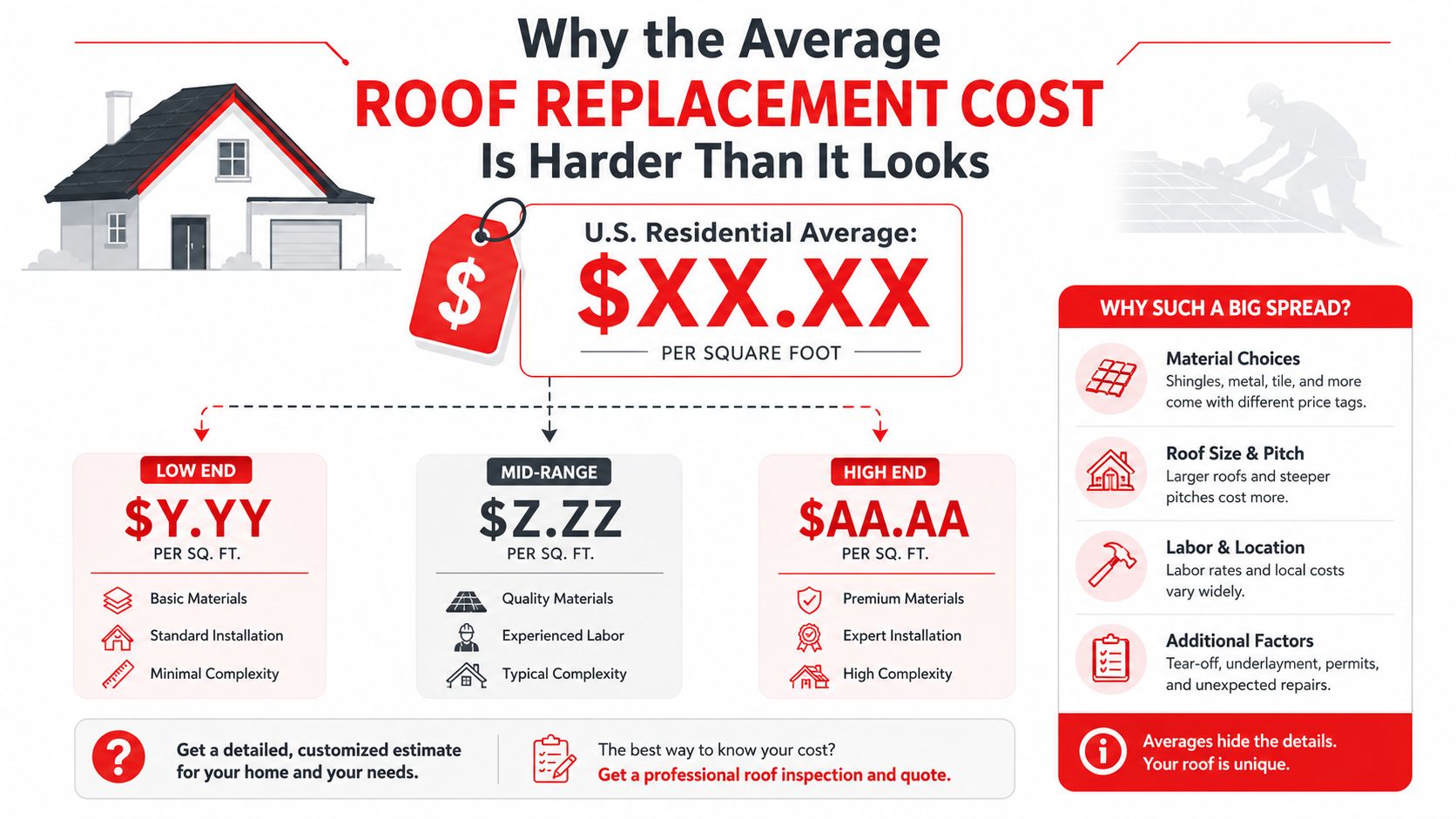
A national replacement benchmark can reach $17,631, while the same source places average repair cost at $4,699. The replacement figure was about 33% above the 2021–2024 four-year average. Verisk's 2025 roofing report makes the point clearly: national data helps establish a broad reference, but it cannot price a specific Concord or East Bay roof.
That gap matters on local quotes. California labor, permitting, disposal, access, and code requirements can push a project above a national headline, while a small, simple roof may come in below it. Roof shape and condition often matter more than the number used in an online average.
A second national reference places replacement costs between $9,858 and $41,822, with an average around $25,840. That wide range shows why homeowners should treat published averages as planning context, not a bid. The scope behind each figure may differ sharply, including tear-off, material grade, flashing, ventilation, decking, and cleanup.
The two numbers that matter first
Before comparing proposals, confirm these two items:
- Roof surface area: Contractors price the roof, not the home's interior floor area. Pitch, overhangs, garages, porches, and separate roof sections increase the measured surface.
- Material system: Asphalt shingles, metal, tile, slate, and low-slope systems occupy different price bands and require different installation methods.
A smaller Concord home with steep slopes, valleys, dormers, skylights, chimneys, or several roof levels can cost more than a larger home with one simple roof plane. Difficult staging and limited access add labor as well.
Get the condition documented before approving replacement. A detailed roof inspection can identify visible wear, leaks, flashing problems, ventilation concerns, and likely decking issues, giving each contractor the same problems to price.
Practical rule: Use the national average to test whether a quote looks plausible. Use the measured roof area and written scope to decide whether it is fair.
How Roofers Calculate Price Per Square Foot
Roofers usually price installation by the square foot of roof surface, and many also discuss a roofing “square,” which represents 100 square feet. The installed rate normally combines materials, crew labor, removal, disposal, overhead, and profit rather than representing shingle cost alone.
A practical U.S. planning benchmark is $4 to $11 per square foot installed, with a national standard asphalt-shingle replacement average around $9,500 to $10,000. One planning guide places its average at $4.75 per square foot. Fixr's roof replacement cost guide offers that unit-cost reference.
Floor area is not roof area
A 2,000-square-foot home doesn't automatically have a 2,000-square-foot roof. Pitch increases the sloped surface, while overhangs, attached garages, porches, and separate roof sections add more area. A relatively straightforward home can therefore require a roof measurement above its interior floor footprint.
That distinction is where many homeowner budgets go wrong. Someone who multiplies the living area by a low advertised rate may leave out the actual roof geometry and then blame the contractor when the measured proposal is higher.
The better calculation is:
- Measure or professionally verify the roof surface area.
- Select a realistic material tier.
- Multiply the surface area by the installed rate.
- Add project-specific work such as tear-off, decking, flashing, ventilation, permits, and access requirements.
What the installed rate includes
A credible quote should explain whether the per-square-foot price includes:
- Existing roof removal and disposal
- Underlayment and water-shedding layers
- Starter materials, ridge caps, and ventilation
- Flashing around penetrations and wall intersections
- Labor, site protection, and cleanup
- Permit coordination and inspections
A low number may be legitimate for a simple roof with minimal preparation. It becomes a problem when the contractor excludes necessary work and adds it later through change orders.
Roof surface area creates the baseline. Roof complexity determines how far the final price moves away from that baseline.
Typical Cost Ranges by Roofing Material
Material choice can move the average roof replacement cost more than almost any decision a homeowner controls. Asphalt usually sets the lowest starting point. Metal, tile, and slate require more upfront money, and some systems bring added structural or installation requirements. In Concord and across the East Bay, the material listed on a quote matters, but the roof's measured area and installation scope still determine the final number.
Use the ranges below for planning, not as bids. A broad national benchmark places replacement work around $4 to $11 per square foot, while the California material ranges below show why one headline average can mislead. Local labor, access, tear-off, and roof design can push a quote outside these bands.
Material comparison
| Material | Cost per Sq Ft Installed | Typical Total for 2,000 Sq Ft Roof | Notes |
|---|---|---|---|
| Asphalt shingle | $4 to $6 | $8,000 to $12,000 | Affordable baseline, widely used, practical for many homes |
| Standing-seam or metal | $8 to $14 | $16,000 to $28,000 | Higher upfront cost, durable appearance, longer service potential |
| Clay or concrete tile | $10 to $18 | $20,000 to $36,000 | Heavy system that may require structural review or reinforcement |
| Natural slate | Premium end of the market | Above common asphalt budgets | Distinctive, heavy, expensive, and highly dependent on qualified installation |
| Modified bitumen or TPO | Project-specific | Project-specific | Common on flat or low-slope areas, additions, and commercial buildings |
Asphalt shingles are the practical baseline when the structure suits them and the homeowner wants to control the initial budget. Basic and architectural shingles differ in thickness, appearance, warranty terms, and wind or fire performance. The cheapest package can become poor value if it leaves out ventilation, flashing, disposal, or other required work.
Metal roofing costs more because panel fabrication, trim, flashing, and installation technique demand precision. Standing-seam systems suit homeowners seeking a clean appearance, long service potential, or resistance to some common roofing hazards. The crew must detail penetrations and transitions correctly, or the material's advantages will not protect the home.
Clay and concrete tile work well with many California architectural styles, but the weight must be addressed before pricing. Have the roofer verify whether the existing framing can support the proposed system. A tile replacement may require more than a simple tear-off and installation.
Natural slate belongs in its own budget category. It is heavy and requires specialized handling and installation, so a basic per-square-foot comparison may understate the project's planning and labor demands.
Flat and low-slope systems use different drainage and membrane details than pitched shingle roofs. Ponding risk, penetrations, parapets, equipment, and access may affect the quote more than the membrane price.
Choose the material that fits the home's structure, appearance, fire-performance needs, maintenance expectations, and ownership plans. A lower starting price loses its appeal if the system or installation scope creates an early second project.
The Cost Drivers That Change Your Quote Most
Two roofs with similar measured areas can generate very different proposals. The reason usually appears in the scope, not in the contractor's arithmetic.
Pitch and access
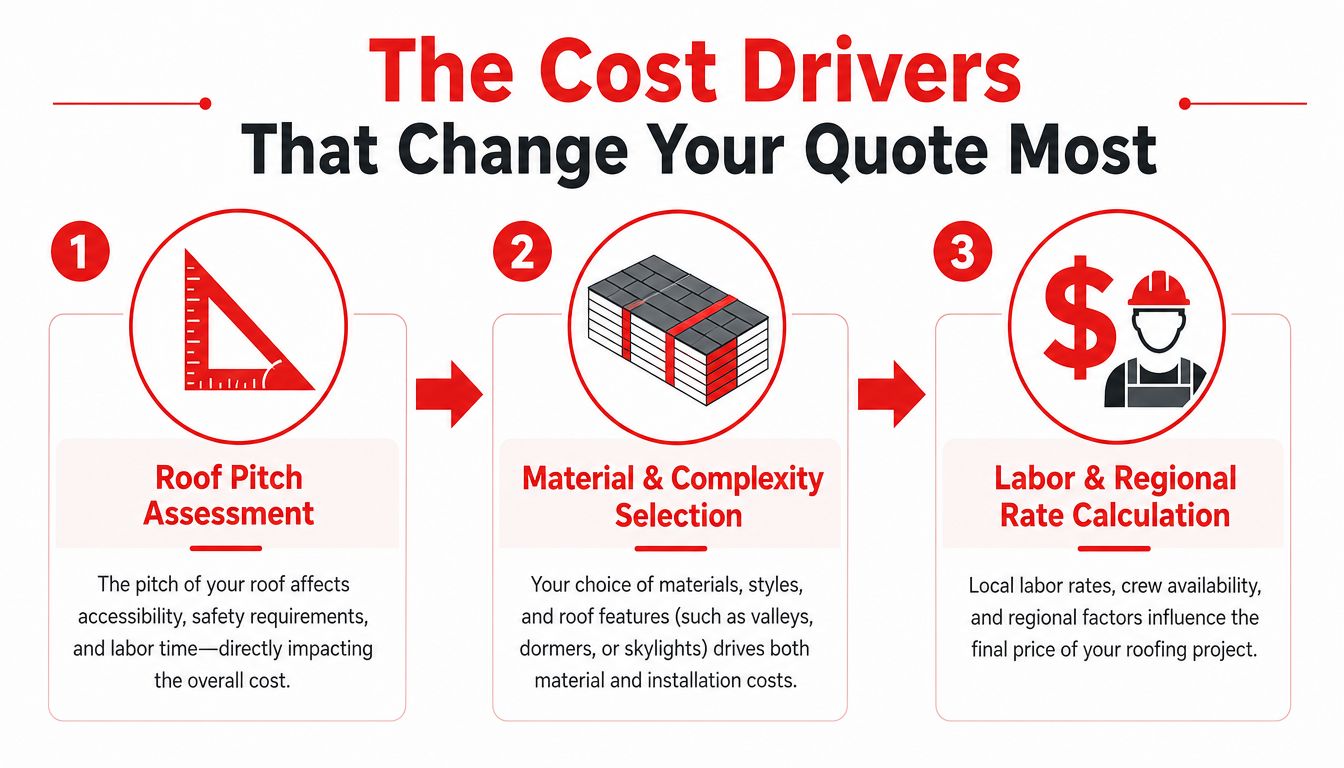
A steep roof slows installation and increases safety requirements. Crews may need additional staging, fall protection, material handling, and setup time. Multi-story walls, narrow side yards, landscaping, fences, and limited driveway access create similar labor pressure because workers have fewer efficient ways to move materials and debris.
Roof geometry also matters. Valleys, hips, dormers, skylights, chimneys, and multiple roof sections require more cuts, flashing, transitions, and inspection points than a simple roof plane.
Tear-off and disposal
Removing the existing roofing exposes the deck and gives the crew a clean surface for the new system. It also creates labor, hauling, and disposal work. A proposal should state how many existing layers are included, how debris will be protected and removed, and what happens if the crew finds additional material beneath the visible layer.
A low teaser quote often leaves tear-off or disposal outside the headline price. That's one of the fastest ways for the final invoice to rise.
Decking and structural repairs
The roof deck can't be priced accurately from the ground when water has reached the wood. Once the old system comes off, the crew may find soft, cracked, or deteriorated sections that need replacement before underlayment and shingles go down.
A sound proposal explains the unit or allowance used for unforeseen decking work. Homeowners shouldn't accept a vague “repairs as needed” clause with no explanation of how the charge will be calculated.
Underlayment, flashing, and ventilation
Underlayment provides a secondary water-shedding layer below the exposed roofing. Ice-and-water protection, upgraded synthetic underlayment, new pipe flashings, chimney flashing, and better attic ventilation can improve the system, but each adds material and labor.
California projects may also require fire-performance components and installation details that don't appear in a generic national estimate. The scope should identify the selected products and where each protective layer goes.
Permits and inspections
Permit coordination, required inspections, and code compliance belong in the written proposal. Fees and requirements vary by jurisdiction, project type, and local conditions, so a contractor who excludes them may be presenting an incomplete comparison.
Proposal test: If a quote doesn't separate tear-off, disposal, underlayment, flashing, permits, ventilation, and possible decking repairs, it isn't detailed enough for a five-figure decision.
A Realistic Budget Example for a Concord Home
Consider a representative Concord property with an 1,800-square-foot single-story home and an approximately 2,100-square-foot roof surface. The roof has a moderate 6/12 pitch, one existing shingle layer, and standard code-required underlayment.
The homeowner isn't comparing three different houses. The structure stays the same. Only the roofing system and scope change.
Option one, architectural asphalt
A basic architectural asphalt system generally offers the most controlled upfront budget. The written proposal should identify the measured roof area, one-layer tear-off, disposal, underlayment, starter materials, field shingles, ridge caps, flashing, ventilation, permits, cleanup, and a clearly described allowance for decking repair.
At the general $4 to $11 per square foot installed planning range, the roof surface alone creates a broad starting band. Southern Home Improvement's replacement-cost benchmark uses that same practical range and explains why pitch, tear-off, structure, premium materials, and unusual geometry can push the total upward.
Option two, standing-seam metal
The metal version costs more because the material tier, panel fabrication, trim, penetrations, and installation details are more demanding. The homeowner may gain a different appearance and a longer-term material strategy, but the proposal still needs the same underlying line items.
Metal shouldn't be selected just because it sounds more durable. The contractor should verify compatibility with the roof shape, flashing details, ventilation plan, and surrounding materials.
Option three, tile with reinforcement
Tile may suit the home visually, but the weight can change the project before installation begins. If structural reinforcement is required, that work must be identified separately from the tile package, along with any framing, deck, flashing, and underlayment changes.
The correct comparison isn't “cheap roof versus expensive roof.” It's complete asphalt scope versus complete metal scope versus complete tile scope. Each option should show what the homeowner receives, what the contractor excludes, and how hidden conditions will be handled.
How California and East Bay Pricing Compares to the National Average
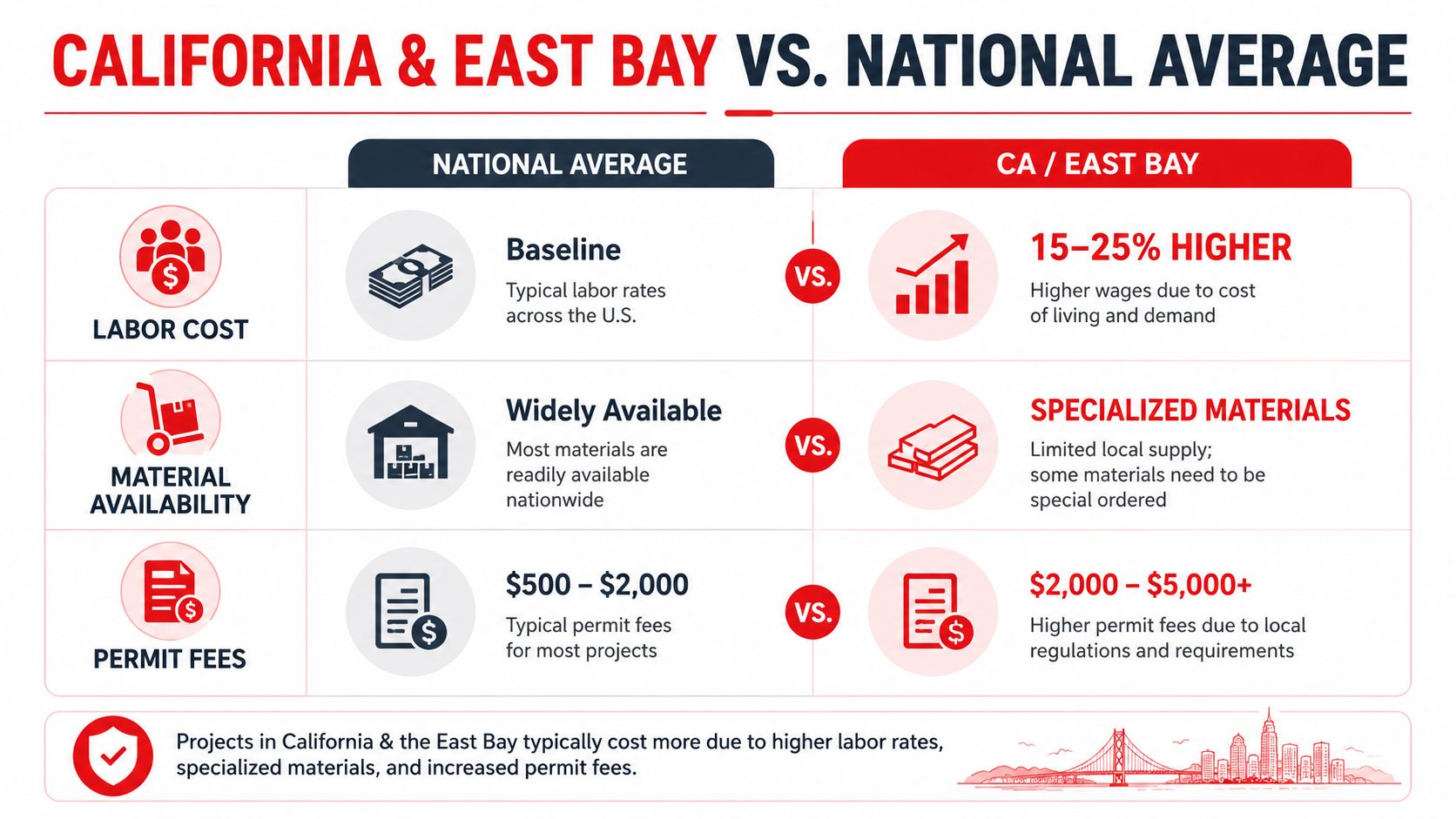
National averages can mislead Concord homeowners. California and East Bay quotes often run above the low end of national ranges because labor, permits, disposal, material delivery, and fire-related requirements affect the installed system, not just the shingles.
Wildfire exposure changes the scope in many California jurisdictions. A roof may need Class A fire-rated materials, compatible underlayment, and installation details that meet local requirements. A national calculator may leave out those items, making its headline figure look more attractive than a complete local proposal.
Why local quotes run higher
- Regional labor: Skilled crews, supervision, safety procedures, and insurance costs shape installed pricing.
- Code and permitting: Local plan review, inspections, and documentation add work and fees.
- Fire performance: Some properties require roofing assemblies designed for greater wildfire resistance.
- Disposal: Tear-off material must be loaded, hauled, and processed at local disposal rates.
- Material availability: Regional demand and storm activity can affect product access and scheduling.
California energy and construction requirements can also affect the selected roof assembly. The application depends on the property and jurisdiction, so the contractor should identify each requirement instead of burying it in an unexplained allowance.
The useful comparison is quote against quote, not quote against an online average. Confirm that the roofer measured the roof, included local requirements, separated allowances from fixed work, and described the complete system. This Northern California roof replacement cost guide adds regional context, but the written scope controls the decision.
Commercial roofs follow a different model
Commercial replacement pricing does not map directly to residential shingle work. A 2026 market benchmark places commercial replacement at roughly $3,380 to $12,279 on average, depending on membrane type, drainage, access, and tenant-disruption constraints, according to this commercial roofing cost benchmark.
A lower commercial range does not make the project simpler. Large roof areas, rooftop equipment, drainage corrections, occupied buildings, safety planning, and phased scheduling can change the final economics. For a Concord homeowner, the dependable number is the detailed local quote, not a national average stripped of California conditions.
Smart Ways to Manage the Cost of Replacement
A homeowner can control the decision even when the roof needs major work. Start with a written inspection that separates repairable damage from a roof system that has reached replacement condition. In Concord and across the East Bay, a quick price means little unless the roofer documents the work.
Request a fast quote only when it includes measurements, photographs, material specifications, exclusions, permit information, and disposal details. Speed helps with active leaks, but an unexplained figure is not a usable budget.
Protect the scope
- Bundle related work: Combine tear-off, decking repairs, flashing, and ventilation in one mobilization to reduce repeated setup and scheduling.
- Compare material tiers: Choose a system that matches the property and expected ownership period. Do not pay for features the home does not need.
- Review financing terms: Deferred payments for up to 12 months may help address active water intrusion before damage spreads. Read the interest, fees, payment schedule, and conditions carefully.
- Document insurance damage: Photograph storm or fire damage and report it through the homeowner's policy process. Assistance can organize the assessment, but coverage depends on the policy and cause of loss.
- Check warranty language: Separate workmanship coverage from manufacturer coverage. Confirm maintenance, registration, transfer, and exclusion requirements.
For claim questions, the For The Public Adjusters claim guide explains how policy language differs from the contractor's construction scope. Keep those documents separate when reviewing payment decisions.
A roof home warranty resource can help property owners assess what warranty protection covers. Reject low bids that omit permits, tear-off, disposal, or decking allowances. Require each allowance to identify its assumed quantity and unit cost.
The lowest quote often becomes expensive after hidden work appears. Ask the roofer to state what happens if decking, flashing, or ventilation needs correction, and get any change approved in writing before installation continues. Pressure to sign because of an insurance deadline calls for caution when the scope remains incomplete.

Putting It All Together and Getting a Real Quote
A national average can orient your budget, but it cannot predict a Concord or East Bay proposal. The U.S. residential benchmark of $17,631 remains a useful reference, while common replacement spending may range from roughly $5,902 to $13,374, with broader projects reaching about $9,858 to $41,822. Those figures reflect different roof sizes, materials, labor conditions, and project scopes. Use them to frame questions, not to approve a contract.
California homeowners should budget from the actual roof surface, not the home's living area. The planning range of $4 to $11 per square foot installed is a starting point only. Steep pitch, complex geometry, fire-rated components, tear-off, disposal, permits, difficult access, and damaged decking can push an East Bay quote above a basic calculation.
What the written quote should show
Require a line-item proposal that identifies:
- Measurements: Roof surface area, pitch, sections, and penetrations.
- Materials: Exact shingle, metal, tile, slate, or membrane system.
- Labor: Installation, safety setup, flashing, ventilation, and cleanup.
- Removal: Tear-off layers, hauling, disposal, and site protection.
- Preparation: Underlayment, deck inspection, repairs, and code-required components.
- Administration: Permit coordination, inspections, payment schedule, warranty terms, and change-order rules.
Ask how the roofer will price hidden decking or flashing repairs. The proposal should state allowances, unit costs, and the approval process before extra work begins. That detail matters more than a polished headline average.
Clear communication also keeps inspections, scheduling, approvals, and documentation organized. Sendvo for home service pros provides guidance relevant to that coordination.
Get two or three quotes from licensed California contractors, using the same material tiers and scope for each. Compare what each proposal includes before comparing totals. The lowest number is useful only when it covers the same work.
California Roof Pros provides Concord and East Bay homeowners with roof inspections, written findings, repairs, full replacements, same-day quotes, emergency response, financing options, and insurance-claim assistance. Visit California Roof Pros to schedule an inspection and receive an estimate based on the property's actual condition.

The CA Roof Pros Editorial Team brings together roofing professionals and experienced content specialists dedicated to providing accurate, practical information about roofing, repairs, maintenance, and replacement. Every article is researched and reviewed to help California homeowners make informed decisions about their roofing needs.