Home insurance in California usually covers a roof leak when it’s caused by a sudden, accidental event, such as wind tearing off shingles or a falling branch, and usually doesn’t when the leak comes from age, wear or poor maintenance. Even when the roof repair isn’t covered, the water damage inside your home often is if it resulted from a covered event. Your policy’s wording and your deductible decide the rest.
That one distinction, sudden versus gradual, explains most approved and denied leak claims. This guide covers how insurers apply it, what’s different in California (including the FAIR Plan), the deadlines insurers must meet, and how to file a leak claim without hurting your chances.
Roof leaking after a storm? Call (925) 412-4584. We tarp to stop the water, photograph and document the damage, and can meet your adjuster. Roof insurance claim help · California Roof Pros · CSLB #1158153 · Concord & Danville, CA
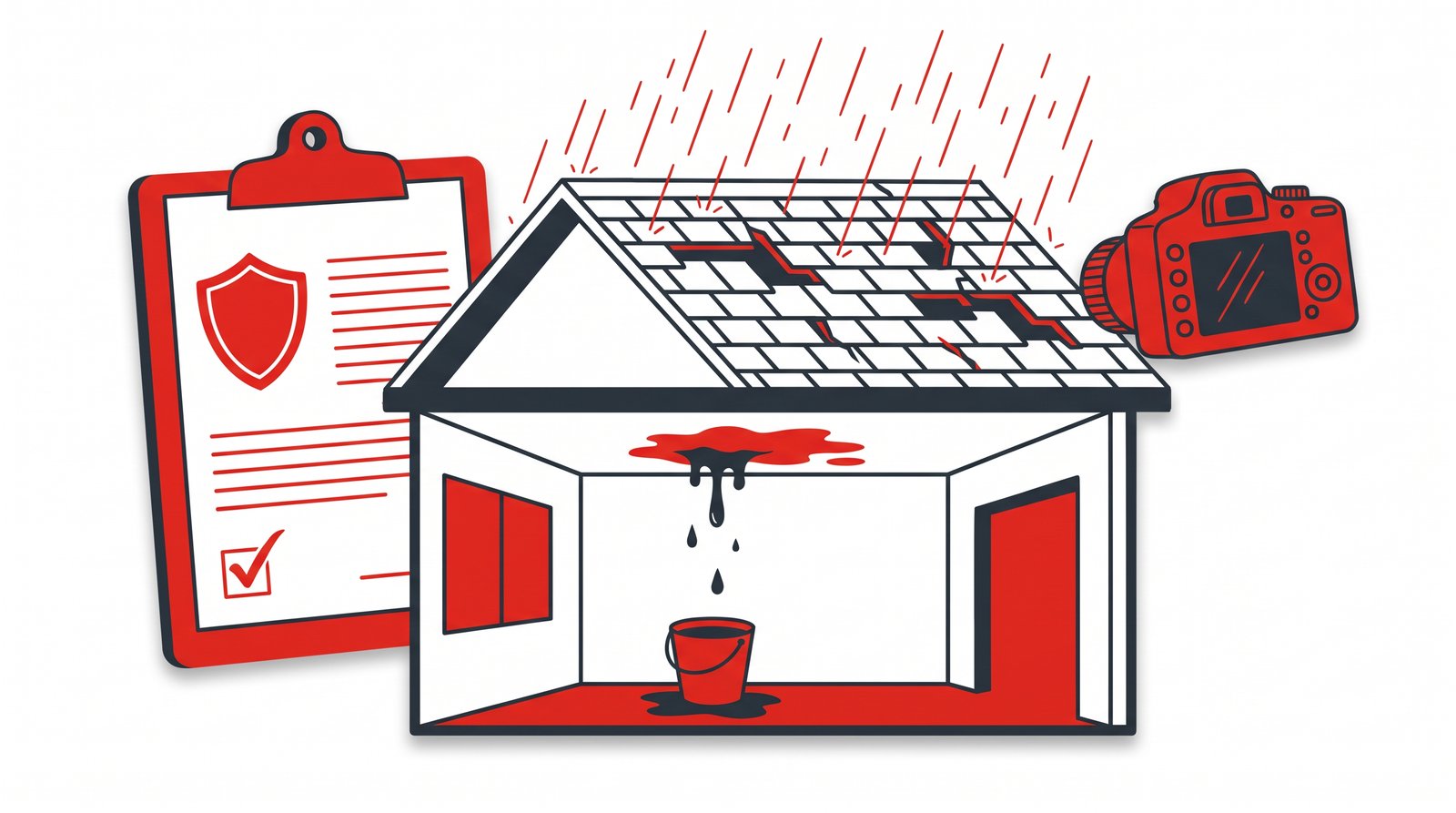
When a roof leak is usually covered (and when it isn’t)
| Cause of the leak | Usually covered? | Why |
|---|---|---|
| Wind tears off shingles or tiles during a storm | Yes | Windstorm is a standard covered peril on most homeowners (HO-3) policies |
| Tree or large branch falls on the roof | Yes | Falling objects are a covered peril. Tree removal may have its own limit |
| Hail punctures or cracks roofing | Yes | Covered peril, though hail is rare in most of the Bay Area |
| Fire damage to the roof | Yes | Covered on standard policies and on the California FAIR Plan |
| Old shingles, cracked tiles or worn underlayment | No | Treated as wear and tear, which policies exclude |
| Flashing or pipe boots that failed with age | No | Treated as maintenance. See roof flashing repair |
| Clogged gutters causing water to back up | Usually no | Often treated as neglect or lack of maintenance |
| A slow leak that went unnoticed for months | Often no | Many policies exclude continuous or repeated seepage, and mold limits are low |
| Faulty installation or workmanship | Usually no | Excluded by the insurer. The roofer’s workmanship warranty may apply |
| Earthquake or flood damage | No | Requires separate earthquake or flood coverage |
General patterns only. Coverage depends on your policy’s exact wording, endorsements and exclusions. The California Department of Insurance residential claims guide recommends reading your declarations page and policy before you file.
The roof repair vs. the damage inside
Insurers often split a leak claim into two parts, and the answer can differ for each.
- The roof itself. If wind lifted the shingles, the roof repair is typically covered. If the roof failed because it was old, the insurer usually won’t pay to fix the roof.
- The interior water damage. Damage to ceilings, drywall, insulation, flooring and belongings caused by a covered event is generally covered, minus your deductible. Some policies also cover sudden interior damage even when the roof failure was gradual, while others exclude it. This is where policy wording matters most.
On older roofs, many California policies now settle roof damage on an actual cash value (ACV) basis, which deducts depreciation, rather than full replacement cost. Our guide to whether insurance covers roof replacement in California explains ACV vs. RCV and roof age limits in detail.
What’s different in California
FAIR Plan policies and roof leaks
Many Bay Area and Sierra-foothill homeowners who lost standard coverage are now on the California FAIR Plan. The FAIR Plan is a basic, fire-focused policy. It doesn’t include the broad water-damage coverage of a standard homeowners policy, so many owners pair it with a difference in conditions (DIC) policy from a separate insurer to cover perils like water damage, theft and liability. If you have a FAIR Plan policy, a leak claim may go to your DIC carrier, not the FAIR Plan. Check both sets of documents.
Deadlines insurers must meet
California’s Fair Claims Settlement Practices Regulations set clear time limits on insurers once you report a claim:
- 15 days to acknowledge your claim, provide forms and begin investigating (10 CCR §2695.5(e)).
- 40 days after receiving proof of claim to accept or deny it, in whole or in part, or explain in writing why more time is needed (10 CCR §2695.7(b)).
- A denial must be in writing and cite the specific policy provisions it relies on.
Your own deadline matters too. Most California property policies require you to sue within one year of the loss if a claim is disputed, though that clock is paused while the claim is being considered. If you think a claim was handled unfairly, you can contact the California Department of Insurance consumer hotline at 1-800-927-4357 or file a request for help online.
The rainy season and “sudden” damage
Northern California’s long dry summers crack sealants and pipe boots, then the first atmospheric-river storms of October and November find every weak spot at once. Insurers know this pattern. If the first storm reveals a long-standing weakness, expect the adjuster to look closely at age and maintenance. Clear photos of storm damage, taken quickly, are your best evidence.
How to file a roof leak claim in California
- Stop the water and stay safe. Don’t climb onto a wet roof. Move belongings, catch drips and follow our roof leak checklist. Your policy requires you to take reasonable steps to prevent further damage.
- Get the roof tarped. An emergency roof tarp limits interior damage, and the reasonable cost is usually part of a covered claim. Keep the invoice.
- Photograph everything before cleanup. Ceiling stains, wet insulation, damaged belongings, and any roof damage visible from the ground. Note the date and the storm.
- Report the claim promptly by phone or app, and write down the claim number and adjuster’s name.
- Get a roofer’s inspection and written report. A licensed roofer can identify whether the damage is storm-related or age-related and document it with photos. That report gives the adjuster facts to work from.
- Be there for the adjuster’s visit, ideally with your roofer, so the damage is walked and explained on site.
- Keep every receipt for tarping, drying, temporary housing and repairs.
- Get the repair done properly once the claim is decided, with permits where required.
Mistakes that get leak claims denied
- Waiting. A leak reported weeks later looks gradual, even if it started with a storm.
- Repairing before documenting. Make temporary repairs to stop the water, but photograph the damage first and keep any damaged materials if you can.
- Describing it as “a leak we’ve had for a while”. Describe what happened and when you noticed it. Don’t speculate about causes.
- Skipping maintenance. Missing shingles left for a season, clogged gutters and old caulk patches all support a wear-and-tear denial.
- Claiming for small leaks. If the repair costs less than your deductible, a claim can still affect your record at renewal. Price the repair first.
The best protection is a roof in good condition before the storms arrive. A fall roof inspection catches the age-related problems insurers won’t pay for while they’re still small repairs.
Roof leaks in San Jose, Sacramento and the Bay Area
We see the same claim patterns across our service area. In San Jose and the South Bay, many 1960s–1980s homes have second or third roofs over original decking, and leaks often trace to worn flashing rather than storm damage. In Sacramento and the valley, wind events and falling limbs from mature trees are the most common covered causes. Wherever you are, the steps above apply.
Roof leak insurance FAQ
Does homeowners insurance cover a leaking roof?
Usually, if the leak was caused by a sudden, covered event such as wind, a falling tree or hail. It usually doesn’t cover leaks caused by age, wear and tear, poor maintenance or faulty installation. Interior water damage from a covered event is generally covered, minus your deductible.
Will insurance pay to fix a roof leak caused by an old roof?
Generally no. Insurers treat a roof that leaks because of age as a maintenance issue. Some policies still cover the sudden interior water damage the leak caused, but not the roof repair itself. Check your policy’s water damage and wear-and-tear wording.
Does the California FAIR Plan cover roof leaks?
The FAIR Plan is a basic, fire-focused policy and doesn’t include the broad water-damage coverage of a standard homeowners policy. Many owners add a difference in conditions (DIC) policy to cover water damage. A leak claim may belong with that DIC carrier.
How long does an insurer have to respond to a roof claim in California?
Under California regulations, an insurer must acknowledge your claim within 15 days and accept or deny it within 40 days of receiving proof of claim, or explain in writing why it needs more time. Denials must be in writing and cite the policy provisions relied on.
Should I call a roofer or my insurance company first?
Stop the water first. Call a roofer for an emergency tarp, then report the claim to your insurer promptly. A roofer’s written, photo-documented inspection report helps the adjuster see whether the damage came from a storm or from age.
Get your roof leak documented before you file.
California Roof Pros tarps active leaks, photographs and documents roof damage, and can meet your adjuster on site across the East Bay, San Francisco, the Peninsula, South Bay, North Bay and Greater Sacramento from our Concord and Danville offices. Coverage decisions are made by your insurer. Call (925) 412-4584 or book a free damage inspection.
California Roof Pros · 5650 Imhoff Drive, Suite A, Concord, CA 94520 · CSLB #1158153

The CA Roof Pros Editorial Team brings together roofing professionals and experienced content specialists dedicated to providing accurate, practical information about roofing, repairs, maintenance, and replacement. Every article is researched and reviewed to help California homeowners make informed decisions about their roofing needs.