A commercial building owner in Concord may be looking at three very different roof decisions at once. The existing system might need a durable replacement, a structurally sound roof might qualify for a lower-disruption restoration, or a reflective assembly might offer better control of heat exposure and energy use. Comparing prices before identifying that path can produce an expensive mismatch.
The right choice depends on roof condition, drainage, foot traffic, rooftop equipment, fire and chemical exposure, expected service life, maintenance capacity, and total ownership cost. California projects also need assembly-level code review. A roof covering's label alone doesn't establish how the complete system will perform with insulation, fasteners, penetrations, edges, and existing substrate conditions. California Roof Pros can support that decision with a free inspection, written findings, and recommendations for residential and commercial properties across California. Property owners can also review these commercial roofing tips from Pine Country before requesting a site evaluation.
The eight types of flat roofing materials below are organized around real project choices, not a universal ranking. TPO, EPDM, PVC, BUR, modified bitumen, metal, SPF, and liquid-applied coatings each solve different problems.
Table of Contents
- 1. TPO Thermoplastic Polyolefin Roofing
- 2. EPDM Ethylene Propylene Diene Monomer Rubber Roofing
- 3. PVC Polyvinyl Chloride Membrane Roofing
- 4. Built-Up Roofing BUR and Tar and Gravel
- 5. Modified Bitumen Roofing APP and SBS
- 6. Metal Roofing With Standing Seam and Flat Seam Systems
- 7. Spray Polyurethane Foam SPF Roofing With Protective Coating
- 8. Liquid-Applied Roof Coatings Acrylic Polyurethane and Silicone
- 8-Point Flat Roofing Comparison
- Turn a Material Comparison Into a Roof Plan
1. TPO Thermoplastic Polyolefin Roofing
A California office with broad sun exposure, rooftop equipment, and an aging membrane may need more than another patch. If the existing substrate remains suitable, restoration could reduce disruption. If seams, insulation, or drainage have deteriorated, replacement is more appropriate. TPO often fits the replacement path when the project requires a reflective single-ply membrane, heat-welded seams, and a balance between installed cost and expected service life.
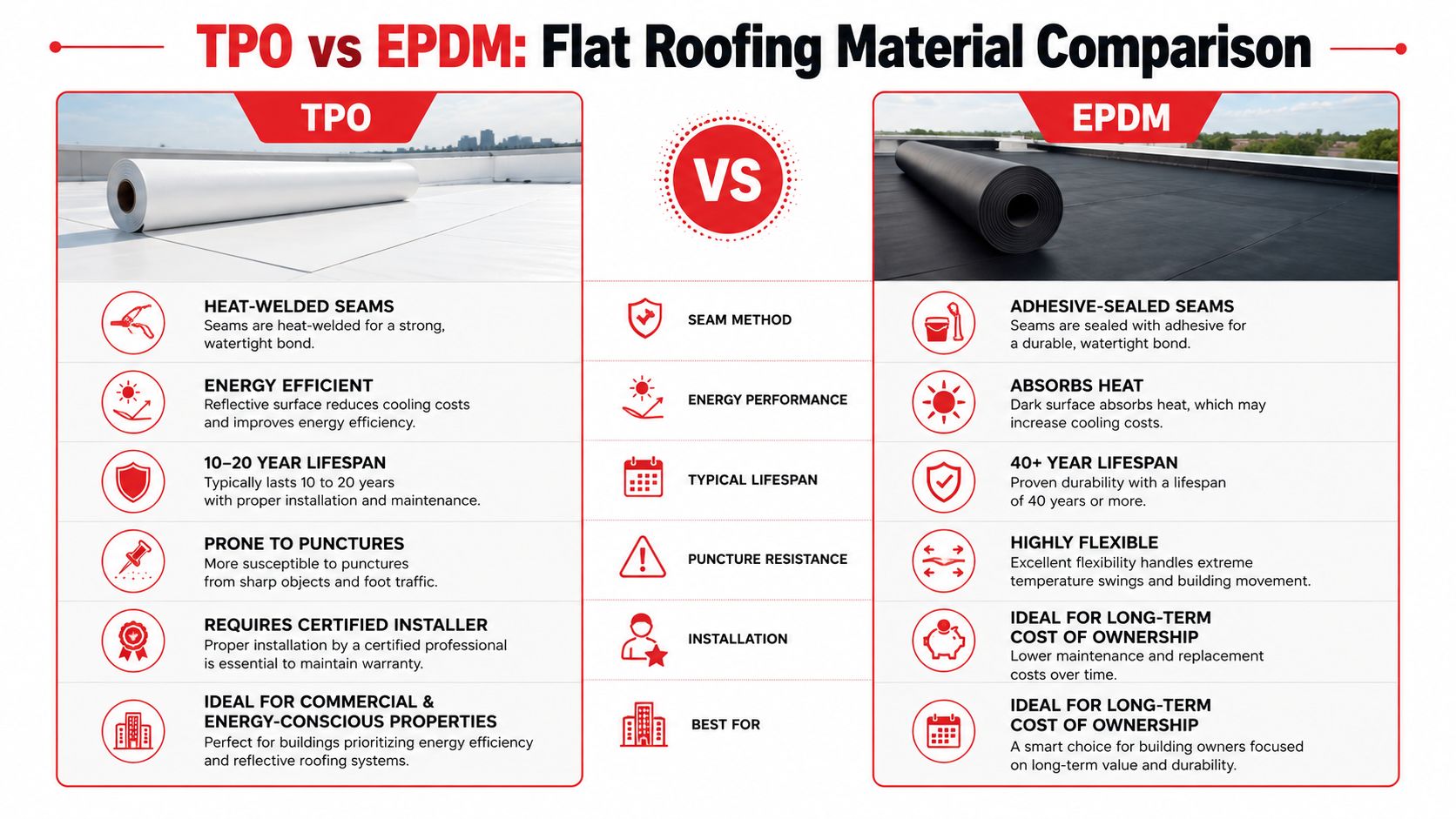
TPO combines rubber, plastic, and reinforcing fabric. Heat-welded seams create a continuous waterproof surface, provided the installer controls weld quality around edges, penetrations, and equipment supports. Industry comparisons place typical installed pricing at about $5 to $10 per square foot, with an expected lifespan of roughly 20 to 30 years (Quality Roofing Solutions).
White and light-colored TPO can address heat exposure and cool-roof requirements. California guidance for applicable low-slope roofs with a slope below 2:12 specifies minimum aged solar reflectance of 0.63 and thermal emittance of 0.75, or an aged SRI of at least 75 (California solar-reflectance code guidance). The practical question is whether the complete assembly, including insulation and drainage, supports that goal. Reflective color alone does not determine roof performance.
Practical rule: Specify the membrane together with the assembly, drainage, seams, edges, penetrations, and maintenance plan.
Where TPO makes sense
Offices and multifamily buildings may select TPO for large roof areas where heat exposure and a relatively direct installation process influence the decision. A retrofit project may use it when an aging membrane requires replacement rather than repeated temporary repairs. New construction can also accommodate TPO when the deck, insulation, attachment method, and rooftop layout are designed together.
TPO requires protection from concentrated foot traffic, sharp debris, poor drainage, and careless maintenance. Commercial membranes commonly range from 30 to 60 mils, based on the typical 0.030-inch to 0.060-inch range reported for flat-roof sheet materials (The Spruce). Thicker material may support a more demanding use case, but it does not remove the need for walkway planning and inspection.
Owners should limit walking to designated paths, keep drains and surfaces clear, and document repairs for warranty records. Installer skill matters at heat-welded seams, so qualification, testing, and a defined quality-control process should be part of the bid.
2. EPDM Ethylene Propylene Diene Monomer Rubber Roofing
A California warehouse with an aging low-slope roof may favor EPDM when movement tolerance, weather resistance, and controlled project cost matter more than a bright reflective surface. This synthetic rubber membrane can be mechanically attached or fully adhered, and its flexibility helps accommodate expansion and contraction as temperatures change. Installed cost and service life vary with insulation, attachment, drainage, access, and existing-roof conditions, so bids should state the full assembly rather than quote membrane alone.
Black EPDM absorbs more solar heat than a white membrane, which makes color relevant on sun-exposed buildings. White EPDM can provide a more reflective surface, but color does not replace decisions about insulation, ventilation, and roof assembly. Owners of warehouses, industrial buildings, and residential low-slope sections should assess membrane condition, interior comfort, drainage, and rooftop equipment together.
EPDM and movement on existing roofs
EPDM can suit a retrofit where the substrate moves and the owner wants a flexible rubber membrane. It may fit a budget-conscious replacement when chemical exposure is limited and the roof does not require a specialized system. Residential low-slope sections can also use EPDM when design, flashing, attachment, and installation meet project requirements.
Restoration may be reasonable if the membrane remains sound, insulation is dry, edges are secure, and leaks are localized. Replacement becomes more practical when moisture has entered the insulation, the substrate is deteriorated, or repeated repairs have not corrected drainage and flashing problems. Age alone does not settle that decision.
Maintenance should focus on the failure points that affect service life:
- Inspect seams: Check for openings, lifting, and adhesive failure, especially around rooftop equipment and penetrations.
- Protect the surface: Keep service contractors on planned walkways and away from unprotected membrane areas.
- Repair punctures promptly: Small damage can let moisture move below the membrane and insulation.
- Control installation conditions: Adhesive application and curing require experienced crews and suitable weather.
Standing water can stress seams and accelerate deterioration, so drains and scuppers need scheduled attention. Foot traffic also deserves planning. A warehouse or home should not be judged by membrane age alone. A professional inspection can separate a repairable roof from one requiring replacement because of wet insulation, damaged edges, or substrate failure.
3. PVC Polyvinyl Chloride Membrane Roofing
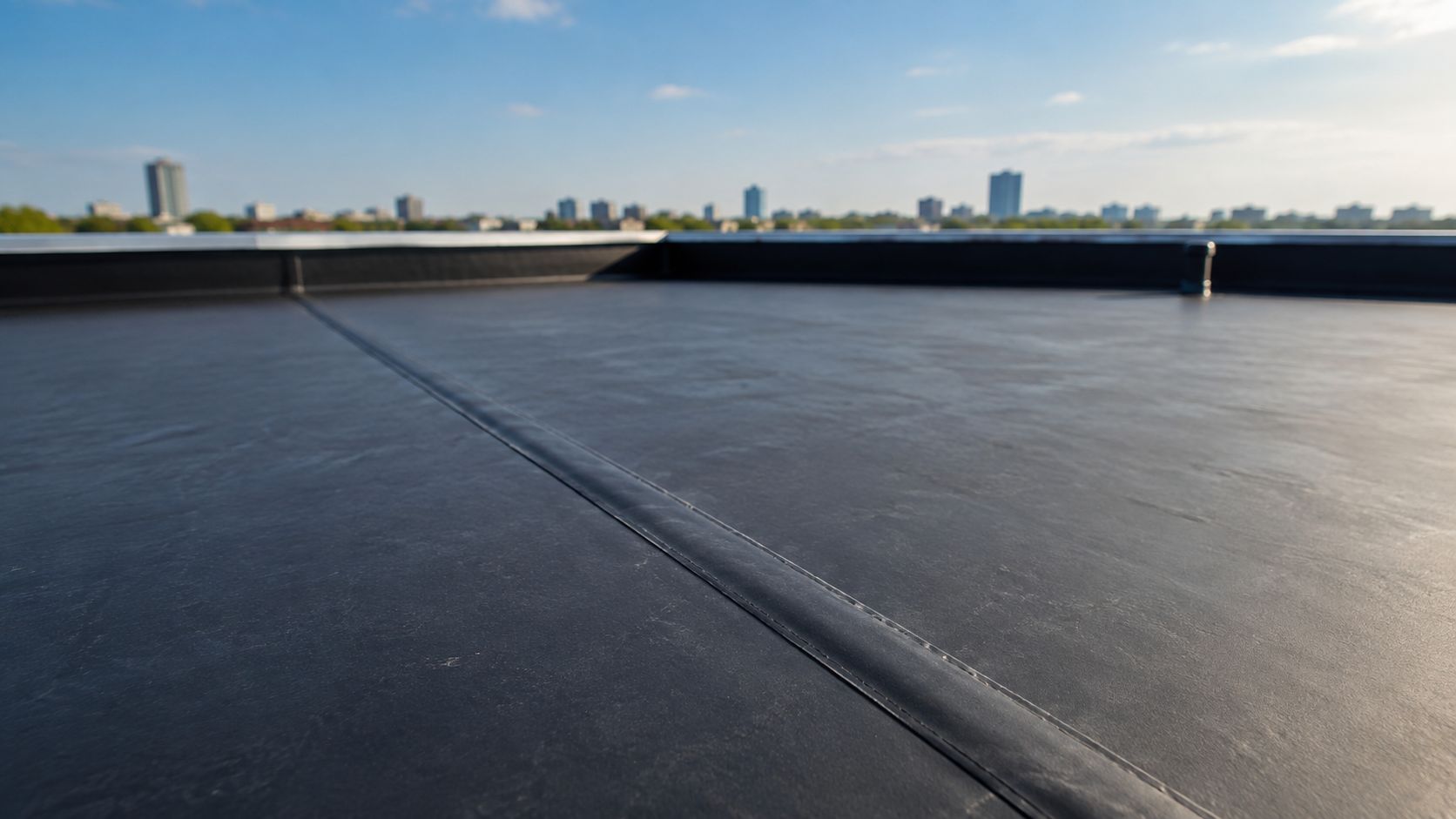
A commercial kitchen may expose its roof to grease, exhaust residue, chemicals, and frequent service traffic. PVC earns consideration in that setting because it is a heat-welded single-ply thermoplastic membrane with resistance suited to demanding rooftop operations. It can also fit manufacturing facilities with chemical exposure or commercial buildings where fire-performance documentation affects material selection.
PVC is commonly available in white and other light colors, which can support California low-slope projects seeking a reflective roof. Color alone does not establish compliance. The project team must verify the product's documented reflectance, thermal emittance, or SRI performance against the applicable requirements, along with the complete roof assembly.
The assembly determines fire performance
Class A is California's highest roof-covering fire rating under ASTM E108 and UL 790-style testing. The evaluation considers flame spread, intermittent flame, and burning-brand exposure (UC Agriculture and Natural Resources Fire Network). The rating applies to a tested roof covering or assembly, not automatically to every installation using the same membrane.
Some coverings achieve Class A by assembly, so underlayment or other layers may be needed to reach that rating (Fire Safe Marin). Insulation, fasteners, penetrations, rooftop curbs, and edge details can change the compliance result. PVC's chemical and fire-related advantages therefore depend on product documentation, approved assemblies, and installation details.
The property's use should guide the specification. A roof with grease exposure, heavy equipment access, or frequent maintenance visits needs planned walkways and protection around penetrations. Heat exposure also matters. A reflective PVC surface may help a California project meet its documented roof-performance requirements, while welding quality and detailing determine whether that benefit lasts through service.
A roof inspection should distinguish restoration from replacement. Restoration may suit a sound membrane with localized damage, dry insulation, secure edges, and workable drainage. Replacement becomes more practical when moisture has spread into insulation, the substrate has deteriorated, or repeated repairs have not resolved flashing and drainage defects. For a new installation, require membrane-specific heat-welding expertise, written repair records, and maintenance access planning.
PVC may require a higher initial budget than some alternatives. A facility facing chemical exposure or strict fire requirements may still justify that cost if the documented assembly reduces operational risk.
4. Built-Up Roofing BUR and Tar and Gravel
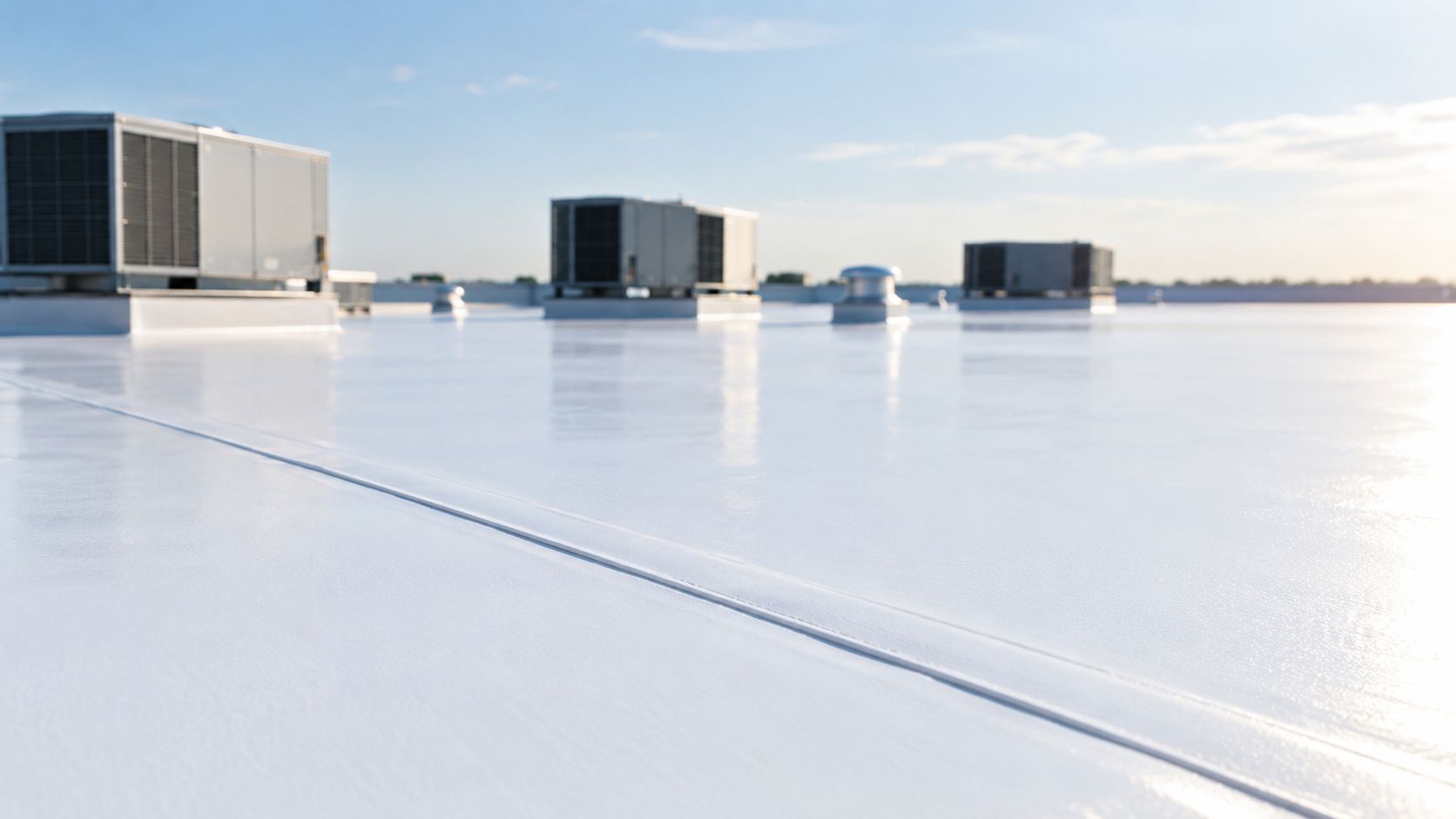
A California commercial roof with rooftop units, regular service visits, and an existing gravel surface may still suit Built-Up Roofing, or BUR. The system has served U.S. buildings for more than 100 years, with historical accounts tracing its emergence to the mid-1800s. Its construction alternates asphalt or bitumen with reinforcing plies, then uses gravel or a coating to protect the completed surface.
BUR's multiple layers can tolerate routine access better than an unprotected membrane, provided walkways and penetration details are maintained. A properly installed system is commonly expected to last 20 to 30 years. The practical choice depends on the roof's condition, heat exposure, equipment layout, and the owner's tolerance for tear-off work. Gravel can shield the bitumen from sunlight, but it also makes inspections, repairs, and surface modifications less straightforward.
Restoration, replacement, or new installation
Restoration may fit when the substrate is sound, drainage is functioning, and deterioration remains localized. Wet insulation, widespread blistering, failed edges, or structural movement call for a replacement assessment. Adding another layer over concealed moisture can preserve the appearance while leaving the underlying failure unresolved.
Maintenance should check gravel coverage, exposed bitumen, debris that holds moisture, drains, curbs, and penetrations. A cool-roof coating can alter the surface performance of older BUR, but compatibility, preparation, and adhesion must be verified before application. Heavy foot traffic or frequent equipment work also requires defined access paths and protection.
For a new installation, the project team should document the assembly, drainage design, insulation condition, edge treatment, and maintenance access. Owners comparing replacement options can review average roof replacement cost information alongside a written scope covering tear-off assumptions, wet insulation, drainage corrections, equipment access, and edge work.
BUR can support restoration when inspection confirms that the layers below remain serviceable.
If the building's use has changed, owners can also explore beyond the bitumen before selecting another asphalt-based assembly. That review may point toward restoration, full replacement, or a different roof type better suited to heat, access, and future equipment needs.
5. Modified Bitumen Roofing APP and SBS
Modified bitumen preserves the asphalt-based approach of BUR while adding polymers that improve flexibility and durability through temperature changes. APP, or Atactic Polypropylene, and SBS, or Styrene Butadiene Styrene, produce different performance characteristics, so the specification should match the building's exposure, access needs, and maintenance plan.
This material can suit an owner seeking a bitumen-based upgrade rather than a fully synthetic membrane. It can be installed in multiple configurations, using heat-welded or cold-applied methods selected for the substrate, building use, access, and site safety requirements. Modified bitumen is recognized within California roof-assembly requirements, so the project team should document the complete assembly for permitting and compliance.
A useful middle path for restoration
An overlay may be appropriate when inspection confirms that the existing roof is dry enough, structurally sound, and able to receive another layer. Concealed moisture, damaged insulation, or movement can make a new surface an incomplete repair. Modified bitumen also fits commercial buildings that need a practical replacement with familiar repair methods and a protective cap sheet.
Torch-applied work requires controlled site procedures, appropriate insurance, safety equipment, fire watches, substrate preparation, and dry conditions. Cold-applied systems remove torch work from the process, but adhesive coverage, seam treatment, and curing conditions still determine whether the assembly performs as intended.
- Choose the application method carefully: Heat-welding, cold application, or another method should follow the specified assembly and site conditions.
- Inspect transitions: Review parapets, penetrations, drains, curbs, and changes in roof plane.
- Watch for blisters: Bubbling, separation, and open seams can permit moisture intrusion and spread damage below the membrane.
- Consider a reflective finish: A compatible topcoat may reduce surface heat absorption on a heat-exposed roof, subject to preparation and adhesion requirements.
Modified bitumen can provide a practical balance for commercial roofs with regular service access, but foot traffic and rooftop equipment still require planned walkways and protection. Drainage and edge detailing deserve the same attention as the membrane field.
The decision turns on the existing roof's condition and the property's intended use. A sound roof may support restoration or an overlay. Widespread moisture, failed details, or a changed equipment plan may justify full replacement and a different assembly.
6. Metal Roofing With Standing Seam and Flat Seam Systems
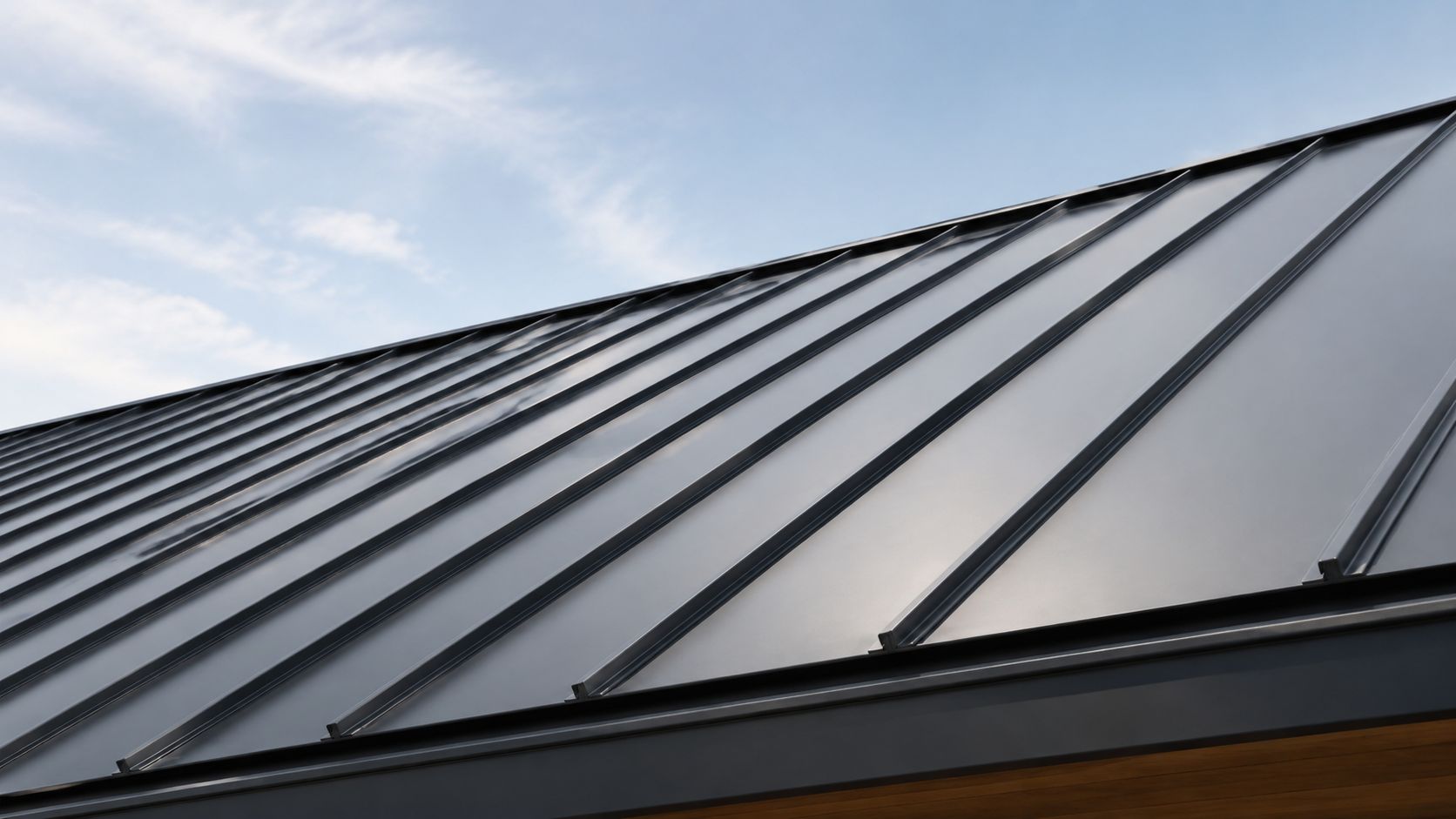
Metal is best understood as a long-service-life strategy, not a universal flat-roof substitute. Standing-seam and flat-seam systems use panels made from materials such as steel, aluminum, or copper, with seams and penetrations that must shed and control water correctly. On low-slope areas, standing seam generally offers a more direct water-shedding approach than a flat seam, but design compatibility remains essential.
Metal can suit high-end residential properties, commercial and industrial buildings, agricultural facilities, and projects where long-term durability and low routine maintenance are priorities. Reflective finishes may also help manage heat exposure. The owner should still evaluate noise, movement, corrosion conditions, structural support, rooftop equipment, and the detailing required around curbs and penetrations.
Metal's value depends on the structure below
A metal retrofit isn't just a matter of placing panels over an existing roof. The contractor needs to confirm attachment, substrate condition, drainage geometry, expansion movement, and the condition of every penetration. Incorrect fastener sealing can create leaks even when the panels themselves remain intact.
A metal roof can reduce recurring membrane work, but it doesn't eliminate inspections. The seams, fasteners, flashings, and penetrations still need attention.
Walkway pads can protect finishes in high-traffic service areas and reduce damage from repeated equipment access. Professional inspections at planned intervals are sensible even for a low-maintenance system, particularly where HVAC units, solar equipment, or other rooftop installations create concentrated traffic.
Property owners comparing metal with other systems should consider the building's remaining service life and future renovation plans. A premium panel system may make sense for a long-hold property, while a restoration coating or membrane replacement may be more practical when the owner expects a near-term sale or major redevelopment. The comparison between metal roofing and asphalt shingles can also help residential owners understand why a metal specification changes installation and maintenance expectations.
7. Spray Polyurethane Foam SPF Roofing With Protective Coating
A Bay Area office crowded with rooftop equipment may need both insulation and waterproofing without adding numerous membrane seams. Spray polyurethane foam (SPF) can address that combination by expanding from liquid components into a continuous layer, then receiving an elastomeric protective coating. The foam follows irregular shapes, penetrations, and difficult transitions, which can reduce custom sheet cuts and exposed seams.
That advantage depends on the roof beneath it. SPF requires a suitable substrate, careful preparation, controlled application conditions, and detailed work around pipes, curbs, drains, and equipment bases. Hidden moisture, unstable materials, or deteriorated decking should be corrected before spraying. A continuous surface cannot resolve trapped moisture or movement below it.
Where SPF fits a California project
SPF is most defensible when an existing roof has complicated geometry and a conventional membrane would require extensive custom detailing. An industrial building with awkward transitions may benefit from a system that conforms to the current shape. A property with a sound, relatively simple roof may have less reason to accept the application controls and coating maintenance that SPF requires.
The coating carries much of the system's exposure burden. Wear, impact, or a gap around a penetration can expose the foam and create a path for moisture. Reflective topcoats may help manage heat on sun-exposed California buildings, but their value depends on the roof design, application quality, and condition of the coating over time.
Owners should evaluate four practical requirements before approving the work:
- Existing roof condition: Investigate moisture, substrate stability, and decking before covering the assembly.
- Rooftop access: Plan protection where maintenance crews repeatedly reach HVAC units or other equipment.
- Site controls: Manage ventilation, weather, foam expansion, coating cure, and overspray around occupied buildings.
- Future maintenance: Budget for inspections, prompt repairs, and protective recoating as the surface wears.
SPF can suit restoration when the existing structure is sound and its irregular geometry makes sheet detailing difficult. It is a poor shortcut over an unexamined roof. Building use, heat exposure, equipment traffic, and the difference between restoration and replacement should determine whether its insulation and waterproofing benefits justify the installation controls.
8. Liquid-Applied Roof Coatings Acrylic Polyurethane and Silicone
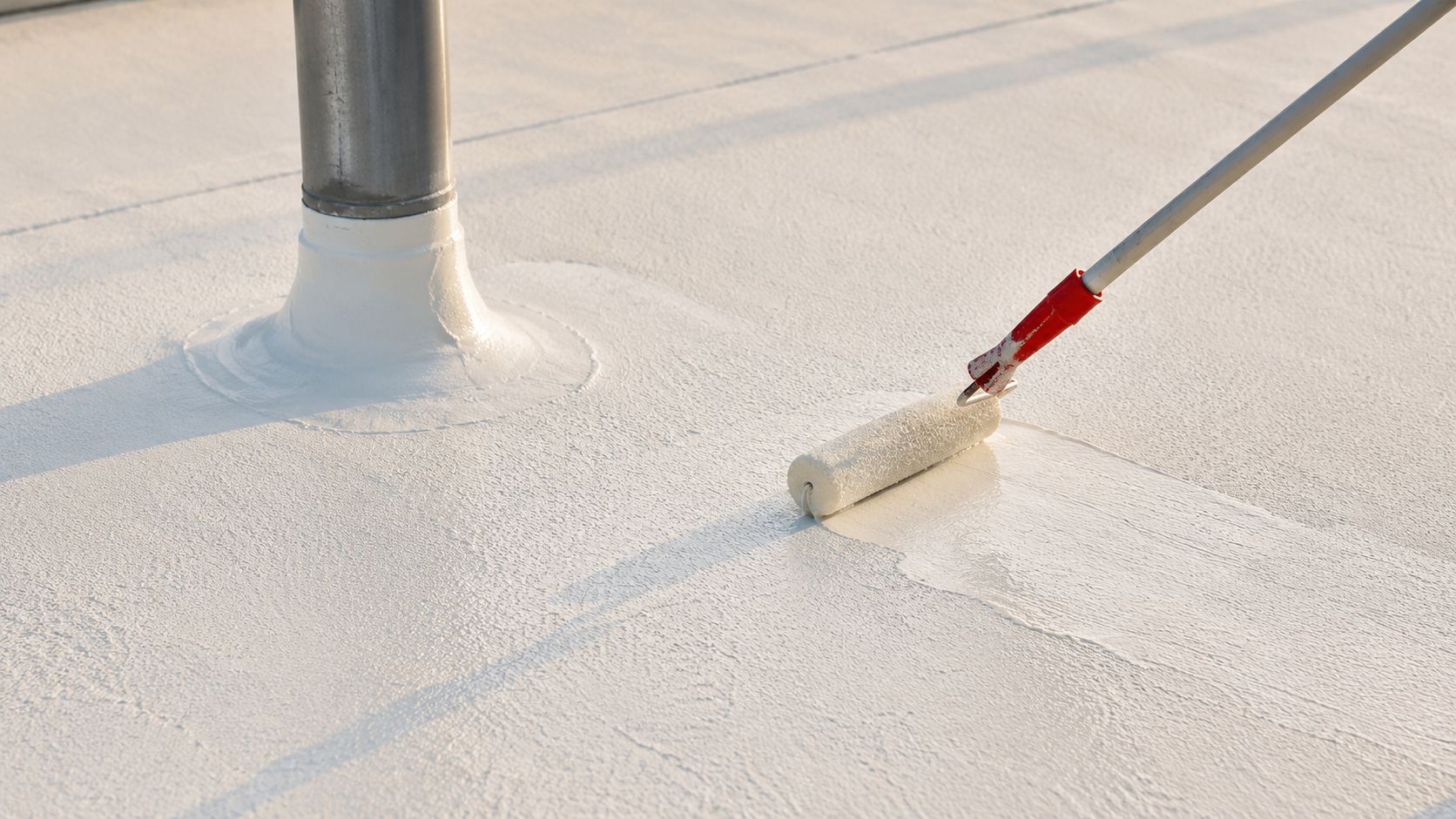
Liquid-applied coatings can extend the service life of a roof that is still a sound candidate for restoration. Acrylic, polyurethane, and silicone form a continuous protective layer over the existing surface, but they do not replace wet insulation, rotten decking, an unstable membrane, or failed drainage. An inspection must establish whether the roof can support coating work before the project is specified.
Product choice follows exposure and building use. Acrylic may suit a cost-conscious restoration where reflectivity is useful. Polyurethane can be evaluated where chemical exposure or impact resistance affects the design. Silicone is often considered for roofs facing persistent moisture or demanding weather. None of these properties removes the need for proper preparation, film thickness, adhesion, edge treatment, and later maintenance.
Start with the existing roof, not the coating
A Concord commercial property owner seeking to avoid a disruptive tear-off should obtain an inspection documenting membrane condition, moisture, ponding, seams, penetrations, and perimeter details. A stable assembly with manageable defects may support restoration and defer replacement. Concealed moisture or deteriorated decking changes the decision, because coating can hide the underlying failure rather than correct it.
Foot traffic around HVAC equipment, rooftop access routes, and areas where maintenance crews work should shape the specification. Those zones may need repairs, reinforced detailing, or protection before the coating is applied. A roof with extensive equipment traffic may require a different restoration plan from a lightly accessed surface.
Reflective white coatings can assist heat management on sun-exposed California roofs, particularly when an older surface has darkened or degraded. The project should confirm material compatibility and applicable code requirements, including the aged reflectance and emittance criteria for low-slope roofs noted earlier.
Preparation determines much of the result:
- Prepare the substrate: Remove dirt, algae, loose material, and contaminants.
- Repair first: Correct leaks, open seams, blisters, and damaged flashing.
- Select by exposure: Match acrylic, polyurethane, or silicone to chemical, moisture, and weather conditions.
- Inspect afterward: Track wear and damage so minor defects do not become water-intrusion problems.
Coating economics depend on the failure it prevents and the condition it preserves. Whole-life environmental assessment can include manufacture, installation, use, and end-of-life stages, while moisture intrusion and premature replacement may alter the environmental case for restoration (whole-life carbon assessment for flat-roof systems). For residential projects, an inspection that finds no sound coating foundation should shift attention to residential roof replacement services.
8-Point Flat Roofing Comparison
| Material | Implementation Complexity 🔄 | Resource Requirements ⚡ | Expected Outcomes ⭐📊 | Ideal Use Cases 📊 | Key Advantages 💡 |
|---|---|---|---|---|---|
| TPO (Thermoplastic Polyolefin) Roofing | Moderate, heat-welded seams; certified installers recommended 🔄 | Low–Moderate materials cost; lightweight; standard tools ⚡ | ⭐⭐⭐⭐, 10–20 yr warranty; reflective cooling reduces HVAC load 📊 | Commercial, multi-family, energy-conscious properties 📊 | Reflective/energy‑efficient, cost‑effective, recyclable, strong heat‑welded seams 💡 |
| EPDM (Ethylene Propylene Diene Monomer) Rubber Roofing | Low–Moderate, adhesive or mechanical attachment; skilled adhesive work needed 🔄 | Low material cost; wide rolls reduce seams; standard tools ⚡ | ⭐⭐⭐⭐⭐, 30–40+ yr durability; excellent flexibility and weather resistance 📊 | Long‑life commercial roofs, buildings with temperature swings, budget‑focused owners 📊 | Exceptional longevity, high puncture/flex resistance, easy repairs 💡 |
| PVC (Polyvinyl Chloride) Membrane Roofing | Moderate–High, heat‑welded seams; specialized equipment and certified crews 🔄 | Higher material cost; requires welding tools and experienced crew ⚡ | ⭐⭐⭐⭐, 15–20 yr typical; strong chemical and fire resistance; reflective options 📊 | Commercial kitchens, manufacturing, sites needing chemical/fire resistance 📊 | Superior chemical/fire resistance, reliable welded seams, energy‑efficient white membranes 💡 |
| Built‑Up Roofing (BUR) / Tar & Gravel | High, multi‑ply hot bitumen application; labor‑intensive and safety‑sensitive 🔄 | Low material cost but heavy system; requires hot‑work equipment and crew ⚡ | ⭐⭐⭐⭐, 40+ yr proven waterproofing when maintained; high thermal load (dark surface) 📊 | Older commercial properties, high foot‑traffic roofs, cost‑sensitive commercial owners 📊 | Time‑tested waterproofing, durable under foot traffic, economical materials 💡 |
| Modified Bitumen (APP & SBS) | Moderate, torch‑applied or cold‑adhesive options; installer expertise critical 🔄 | Moderate cost; requires torch or adhesive equipment and trained crew ⚡ | ⭐⭐⭐⭐, 15–20 yr typical; improved flexibility vs BUR; good seam strength 📊 | Overlays, retrofit projects, owners seeking BUR upgrade without full replacement 📊 | Better flexibility and crack resistance than BUR, faster install, adaptable application methods 💡 |
| Metal Roofing (Standing Seam / Flat Seam) | High, precision installation; specialized panels and fastening techniques 🔄 | High material & labor cost; specialized tools and skilled contractors ⚡ | ⭐⭐⭐⭐⭐, 40–60+ yr lifespan; very low maintenance; recyclable 📊 | Long‑term residential and commercial investments, extreme‑weather locations 📊 | Exceptional longevity, energy‑efficient reflective finishes, recyclable and low maintenance 💡 |
| Spray Polyurethane Foam (SPF) with Coating | High, specialist applicators and strict weather/control conditions 🔄 | Higher upfront cost; specialized spray equipment and periodic recoating ⚡ | ⭐⭐⭐⭐⭐, Seamless insulating membrane; strong energy savings; recoatable for long life 📊 | Complex roof shapes, energy‑performance projects, retrofit over existing roofs 📊 | Seamless insulation/R‑value, conforms to penetrations, excellent energy performance 💡 |
| Liquid‑Applied Roof Coatings (Acrylic/PU/Silicone) | Low, spray or brush application; surface prep critical but less invasive 🔄 | Low–Moderate cost; minimal equipment; quick mobilization ⚡ | ⭐⭐⭐, Extends roof life 10–20 yrs if substrate sound; reflective options reduce cooling loads 📊 | Roof life extension, temporary weatherproofing, budget‑constrained owners deferring replacement 📊 | Cost‑effective extension, seamless coverage, quick install and low waste 💡 |
Turn a Material Comparison Into a Roof Plan
The best roof material depends on the building's actual decision, not the product's reputation. A reflective TPO or PVC membrane may suit many low-slope California projects where heat exposure and cool-roof requirements matter. EPDM can be a sensible choice where flexibility and cost-effective durability are priorities. BUR may remain appropriate where a layered assembly, rooftop access, and established maintenance practices support restoration or replacement.
PVC deserves closer attention when chemical exposure, commercial kitchen conditions, or fire-performance requirements shape the specification. Modified bitumen offers a bitumen-based upgrade for owners who want familiar construction with improved flexibility. Metal can serve a long-hold property seeking a durable system with limited routine maintenance, while SPF can address complex roof geometry and insulation needs. Liquid-applied coatings are most appropriate when the existing roof is structurally sound and the owner wants restoration rather than a complete replacement.
The material name doesn't determine the final outcome. Substrate condition, drainage, access, rooftop equipment, installation quality, penetrations, edge details, and maintenance can change both lifespan and total ownership cost. Standing water, hidden wet insulation, and punctures may force repairs or replacement before a membrane reaches its theoretical service life. A roof's environmental profile also depends on whether restoration avoids a premature tear-off, how long the finished system remains serviceable, and what happens at end of life.
California owners should request more than a material name and a single price. A useful proposal identifies the existing assembly, moisture findings, drainage corrections, tear-off or overlay assumptions, insulation approach, tested fire and cool-roof requirements, warranty conditions, access controls, and planned maintenance. It should also distinguish a repair, a restoration, and a replacement so the owner can compare disruption and risk.
California Roof Pros is a Concord-based, CSLB-licensed, insured, and bonded roofing contractor, License #1158153, serving residential and commercial properties across California with a focus on the East Bay. The company provides free inspections with written findings, leak detection, repairs, replacements, new installations, commercial thermal imaging and reporting, planned maintenance, same-day quotes, emergency response, financing options, and insurance-claim assistance. A dedicated project manager and on-site foreman can coordinate work where occupied buildings, tenants, equipment, or business schedules make disruption a central concern.
California Roof Pros can inspect the existing roof, document drainage and moisture conditions, and recommend whether repair, restoration, or replacement fits the property and budget. Visit California Roof Pros to request a free inspection and written recommendations for a residential or commercial roof anywhere in California.

The CA Roof Pros Editorial Team brings together roofing professionals and experienced content specialists dedicated to providing accurate, practical information about roofing, repairs, maintenance, and replacement. Every article is researched and reviewed to help California homeowners make informed decisions about their roofing needs.